
Stubborn goose feet, spinning worms, biting beavers and the happy snail















No let-up, it's goose-stepping ahead
In October 2024, I stopped my first Backyard Ultra in Rettert after 12 laps and 83 kilometres due to pain in my right leg, and I had to take a break from running for a few weeks. I already suspected it: the pes anserinus syndrome, also known as "goose foot syndrome", was on its way. The irritation affects the tendon insertion of three thigh muscles that come together on the inside of the knee joint. Even though it was "only" a persistent small accumulation of water and I didn't feel any severe pain, this syndrome prevented me from training and running as normal. Specifically, this meant that there were no races in sight, no ultramarathons and no tempo runs.
Some runners might laugh at my "running abstinence", as I didn't have a "real" injury, but it contradicts my running philosophy of not training with any symptoms or complaints. The risk of being out of action for a long time is simply too high for me. The famous motto 'NO PAIN NO GAIN' does not mean that I disregard symptoms and continue to train regardless of pain.
However, this motto took on a different meaning after I underwent PRP (platelet-rich plasma) therapy. For two months, I received an injection in my leg every Thursday, which I found extremely painful each time. The discomfort continued for a few days after each injection, and then it was Thursday again, with a new needle piercing my leg. But the therapy, combined with lots of stretching and strength training, was very successful.
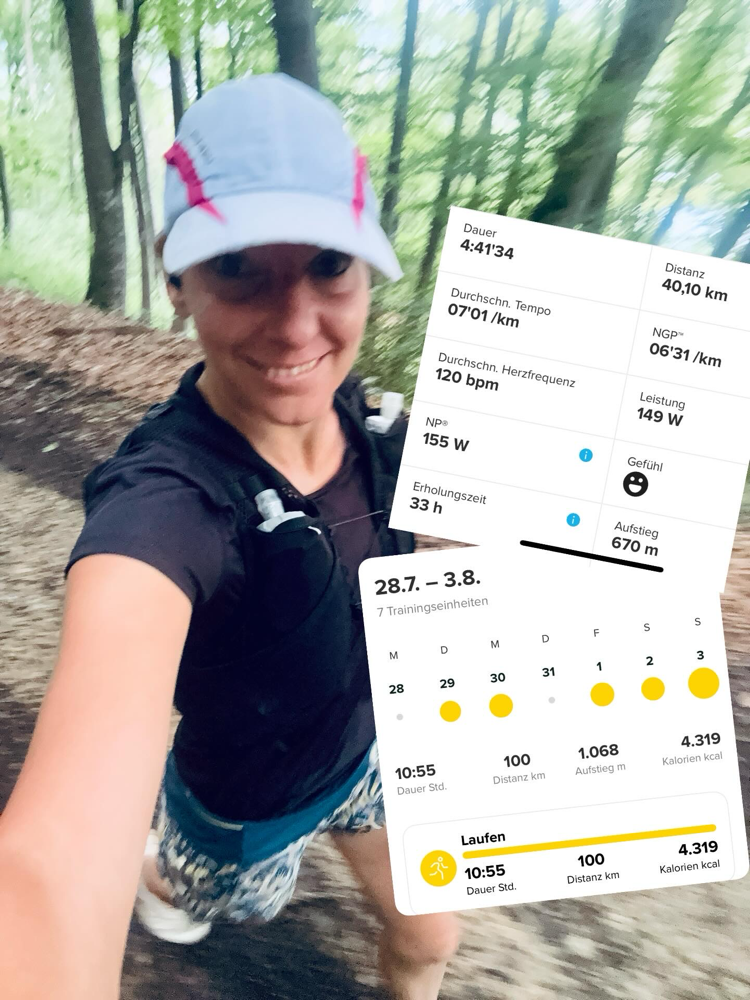
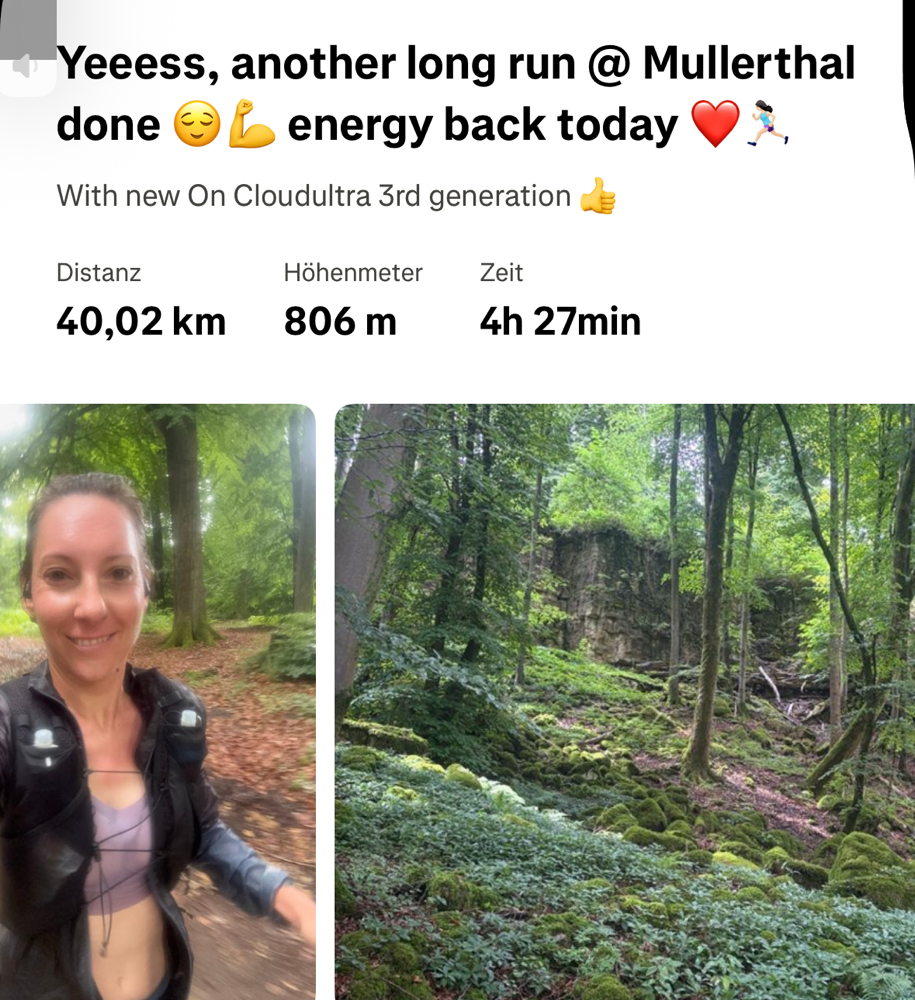
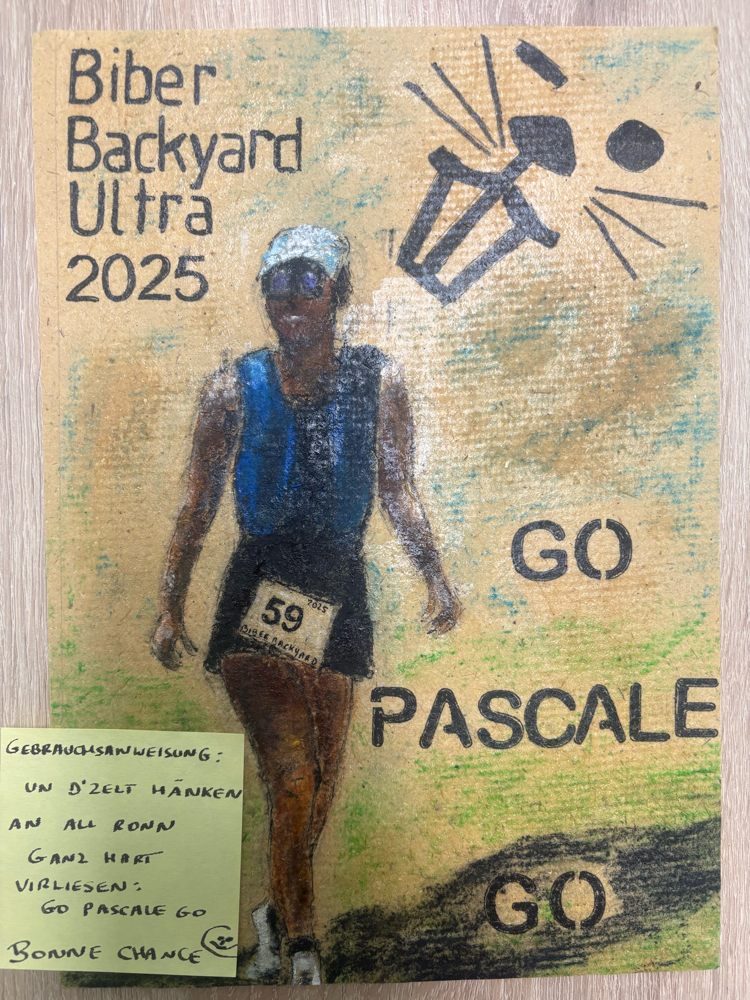
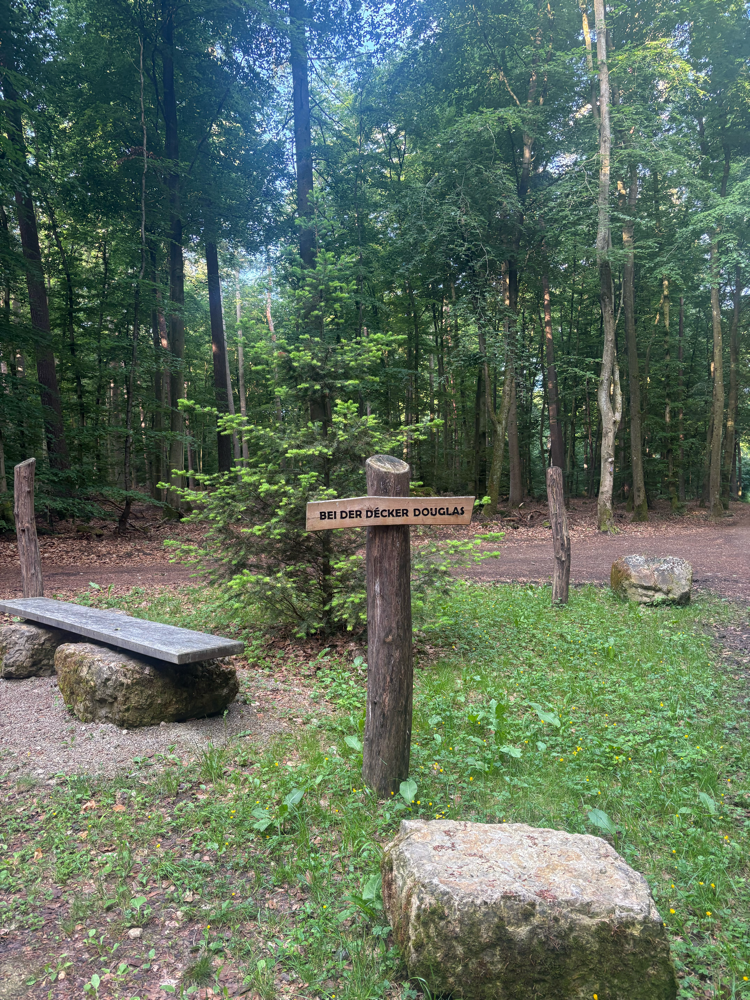
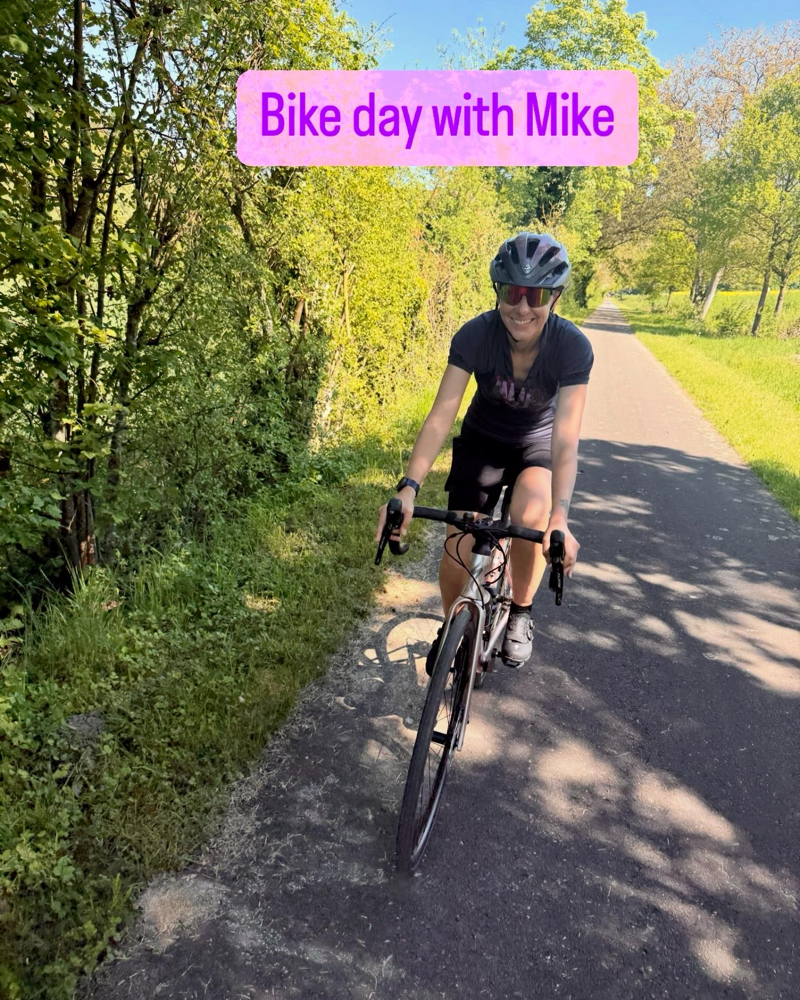
At the beginning of January 2025, I started training again. This consisted of very slow running sessions, cycling and lots of stretching and strength training. My trainer structured the individual sessions so that the runs weren't too close together and my leg wasn't put under too much strain at the beginning. As my big running highlight was the Biber Backyard Ultra in June, I organised my running sessions a bit differently, „looping“ at a constant, very slow pace. I followed the guidelines of a Backyard Ultra: running 6.7 km in under an hour (with approx. 120 metres of elevation gain/6.7 km). This type of training proved to be very beneficial and productive. I was able to run without overloading, increasing the distance by one "loop" each week. As a result, I was able to run 20–26 km on Sundays without any discomfort. At the same time, I listened carefully to my body and learnt to plan my sessions more consciously and effectively if I had the impression that a session might be counterproductive. From March onwards, I was able to return to my usual training routine, which included interval training, recovery runs, cycling, stretching and strength training, as well as running up to 40 km on Sundays at a consistent pace of 7:15 km/h. My favourite backyard ultra running route became a trail route where I ran around a fir tree called "The big Douglas”. I named the track the "Big Douglas track“. Later on, I even ran around "Big Douglas“ for up to 8 hours, but more on that later.
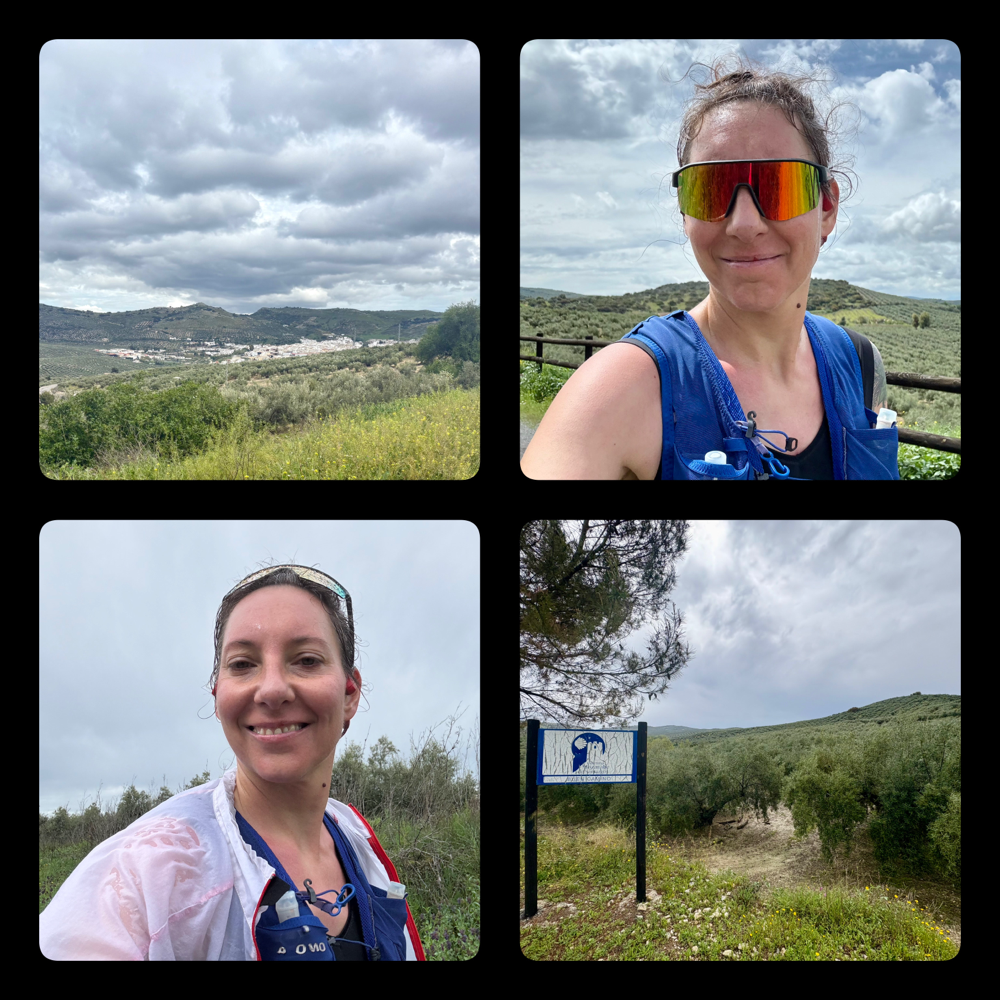
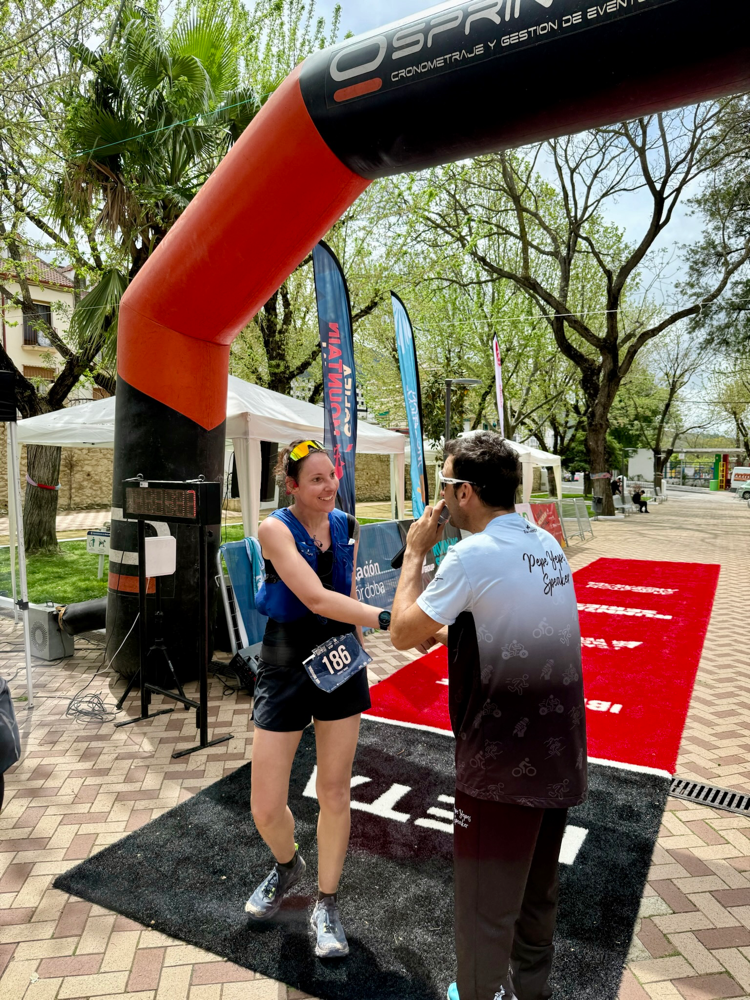
I was particularly pleased that I was able to take part in races again from mid-April. The first race in April, the Maraton Subbetico Mozarabe 50km, took place near Cordoba. The route covered a section of the Camino de Santiago de Compostela, the Camino Mozarabe. At the start of the run, it was raining heavily and it was quite windy. But after a few hours, the sun started to shine through.
As I was actually spending the Easter holidays at home in Andalusia, the run fitted in very well with my preparations for another major run in April, the Mäschder Drehwurm.
The (ear)worm from Großmaischeid
The Mäschder Drehwurm is a 12-hour running event (6 hours were also possible) organised by Katjas Laufzeit. A „Drehwurm“ means a worm that spins around the whole time, and „Mäschder“ (Großmaischeid) is the name of the village where the race takes place. The aim is to complete as many laps as possible in 12 hours (2.6 km and 47 metres in altitude per lap on forest, woodland and meadow paths). This race also served as preparation for the Biber Backyard Ultra in June. I enjoy the 24-hour and 12-hour format and I also like the organisers Katja and Andreas, who create a very warm and funny atmosphere and offer particularly exciting running events.
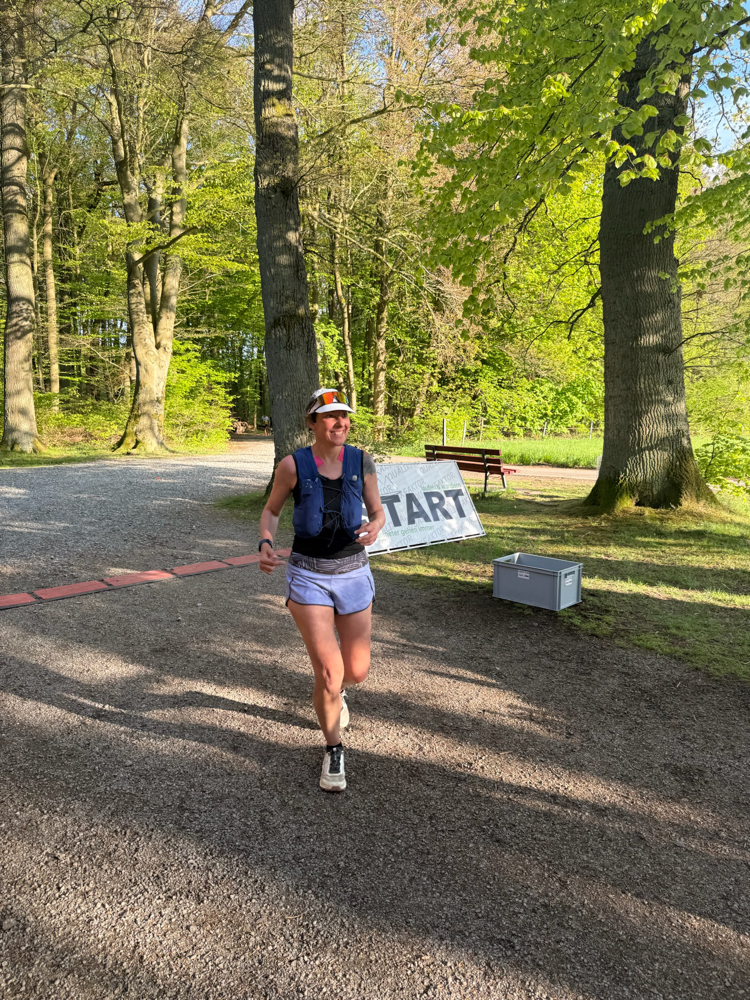
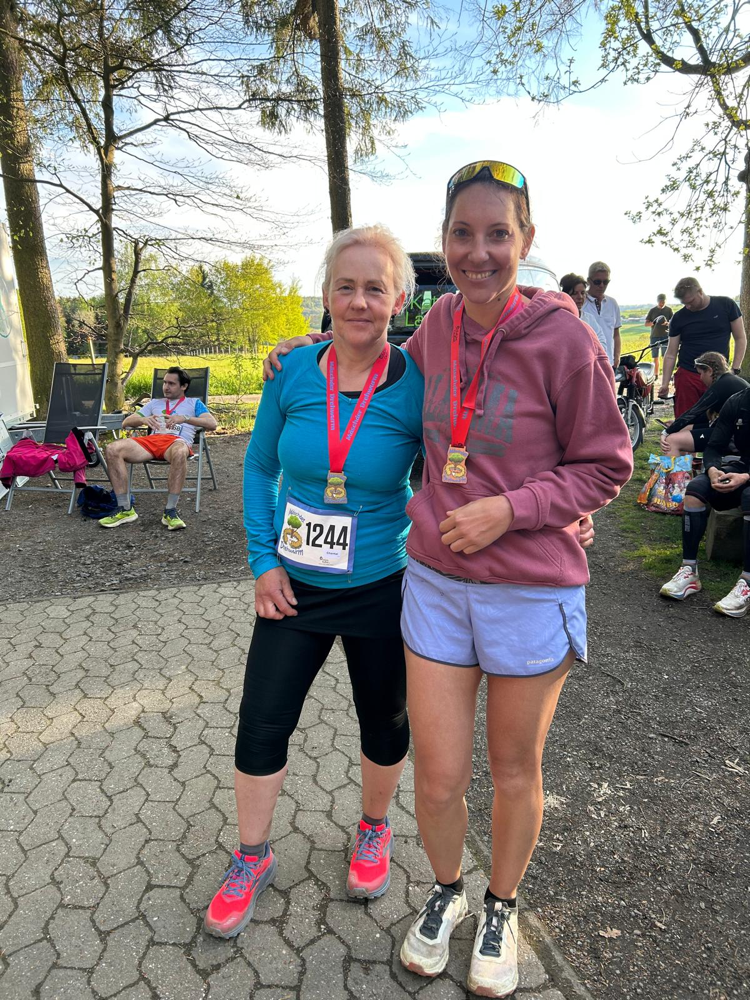
On 26 April at 7:00 a.m., I set off in a relaxed mood. My running friend Chantal from Luxembourg was also at the start. I didn't want to start too quickly, so I tried to maintain a constant pace for the full 12 hours. I mentally divided the run into 6.7 km loops again and aimed to complete each one in under 60 minutes. I didn't let myself get dragged along by the pace of the other runners and stuck to my planned pace. I managed to do so thanks to a visualisation with a fitting motto: a snail. To explain briefly, about a week before the run, a thick black snail appeared hanging from my office window. As it was quite conspicuous, everyone who came into my office commented on it, leading to several conversations about snails and their symbolism. Mindfulness, deliberation, patience, persistence and restraint... it was a perfect motto for a 12-hour run!
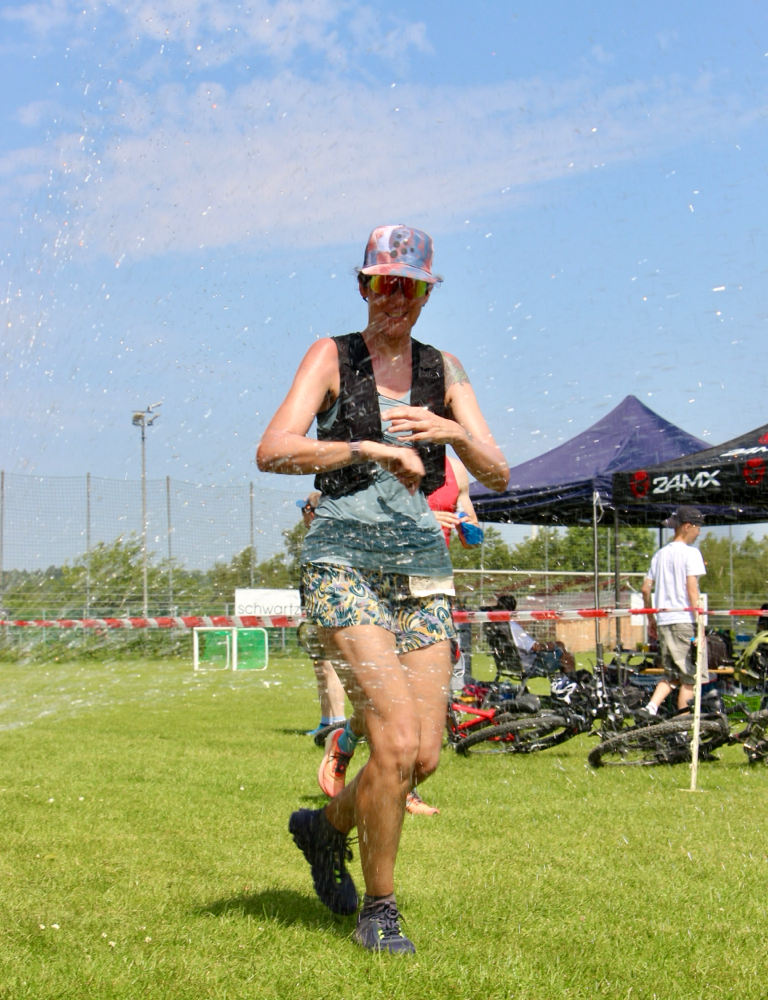
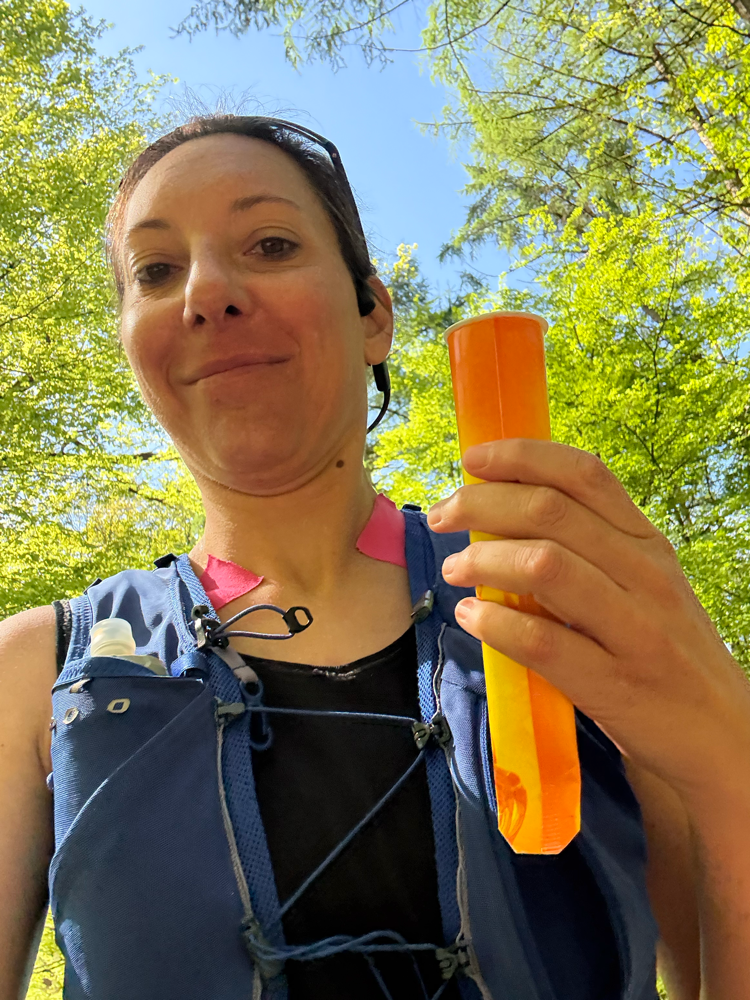
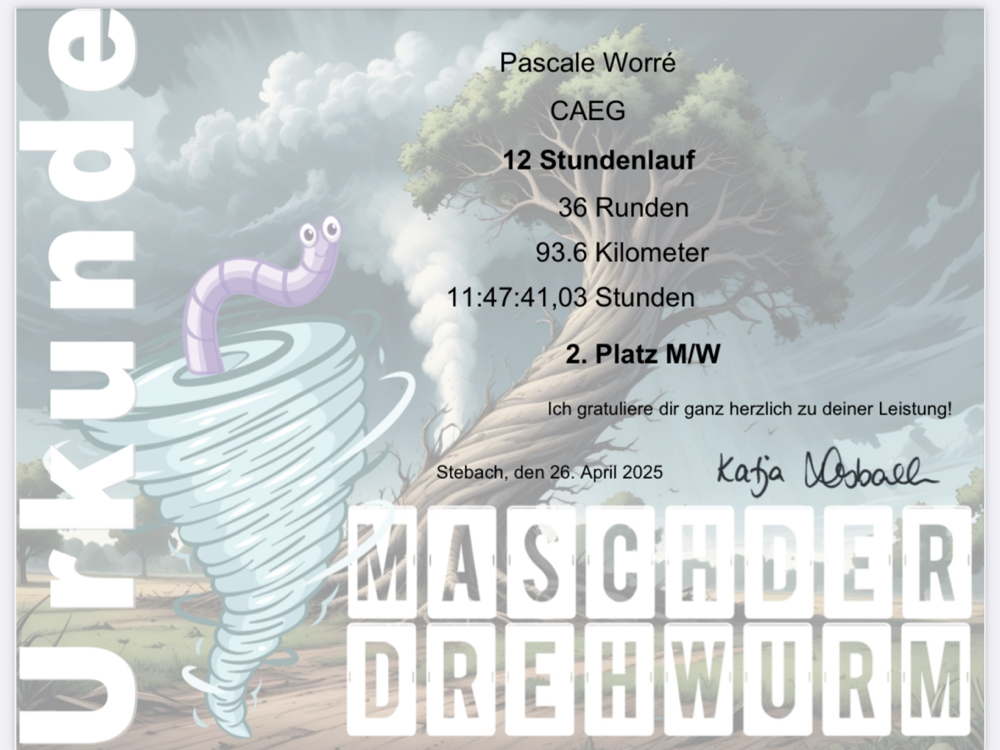
I did lap after lap at the same pace without many breaks. I preferred not to stop and not to sit down. I just filled my bottles quickly, grabbed some food and continued running. There were always surprises at the refreshment station: The selection of supplies on offer increased with each lap — they even had ice cream! Good music was playing too, and I was curious to find out what song would come on next, until the spinning worm suddenly turned into the ultimate „earworm“. At the end of the run, the same song played over and over again, lap after lap... „I'm doing laps and laps here for hours and hours“... („Ich drehe schon seit Stunden hier so meine Runden“). The song „Mambo“ by Herbert Grönemeyer definitely fit like a glove. And then the 12 hours were up. I completed 36 laps, equating to 93.6 km and 1,740 metres in altitude, and took 2nd place on the women's podium.
But that was just the cherry on the cake, because what made me happiest was that I felt positive the whole time, without a single low point. I ran mindfully, carefully and patiently at a constant pace, like a snail. But after the Mäschder Drehwurm was before the Biber Backyard Ultra, and so the looping continued.
The biting beaver
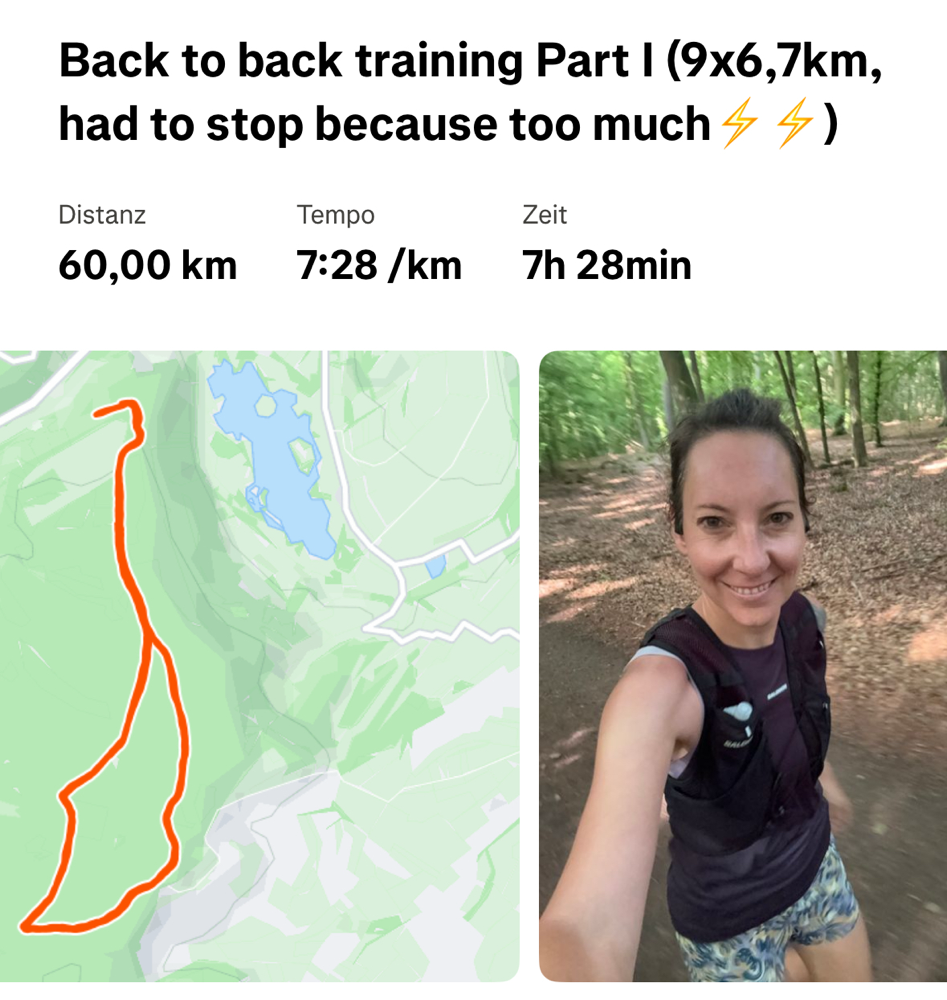
May was a very intensive training month. In addition to stretching, strength training and cycling, I ran around 400 kilometres. On the weekends, my schedule included so-called „back-to-back runs“ which I completed in Andalusia or around the „Big Douglas“. The longest training distance was 67 kilometres, although I had to stop after 60 kilometres due to a heavy storm with thunder and lightning.
I am aware that my training sessions can be quite lengthy and I am undertaking them independently. Although this is very physically and mentally demanding over a period of several months, I find these runs fulfilling. I simply enjoy running very far and long distances. And it doesn't bother me at all to always run the same route alone. On the contrary, I find myself in a complete state of flow and I am able to switch off and I learn a lot about myself, my body and about running itself. Training plans that consist of several short (e.g. 15km) sessions demotivate me and I also tend to get injured. And then something is simply missing in my life and I don't feel ‘complete’.
In addition to the long sessions at the weekend, the programme included other training runs, cycling and stretching/strength work were also on the programme. It wasn't always easy to balance all the different aspects of my life. My work in school management can be very demanding and I also have a private life with a partner, family and friends. On Mondays, after a “back to back weekend”, it was straight back to full speed ahead at work, which of course impacted regeneration. During the week, I often got up at 4am to go for a run before a long day at work. But I enjoyed running so early in the morning at sunrise. And in addition I had a clear goal in mind: the Beaver Backyard Ultra.
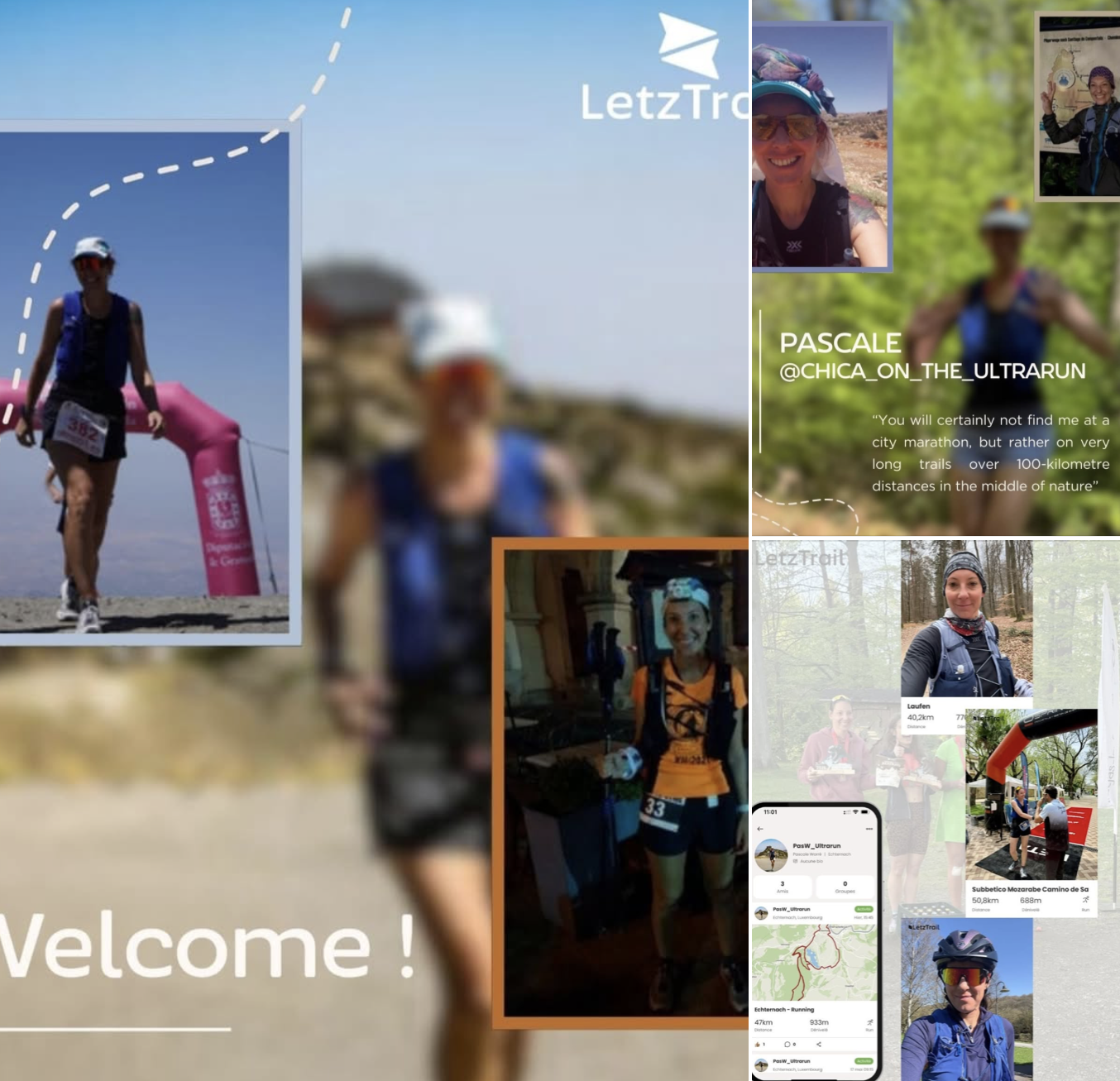
I was really happy at the end of May. I felt strong and well prepared, even though I was mentally tired. But it was a cosy, fulfilling kind of tiredness. The tapering period was all the more welcome. Other important factors in preparing for a Backyard Ultra include the equipment (tent, tables, chairs, clothing,...), my crew (consisting of a very kind and caring nurse), my meal plan and the journey. I would like to take this opportunity to thank LetzTrail for providing my clothing. LetzTrail is a new free ‘all-in-one app’ for outdoor activities. I have been an ambassador for LetzTrail since June and am delighted to support this new project from Luxembourg.
But a week before the start, the "sword of Damocles" began to hang over my head. The Beaver Backyard Ultra taught me a valuable life lesson and, with hindsight, it was a turning point in my life. But what exactly happened? Despite all my thorough preparation, one uncontrollable factor completely threw the race off course, and I still can't quite explain what was going on. It may simply have been bad luck and/or a combination of several factors.
A week before the Backyard, I got cramps in my tummy, which is basically nothing new for me. I tend to get a lot of stage fright before races. As this race was particularly important to me and I had invested a lot of energy and time in it, I probably put myself under a bit of pressure. I didn't eat properly during the week leading up to the race as I had absolutely no appetite and, in addition to the cramps, I had a constant queasy feeling in my stomach. However, due to the high energy consumption during the previous weeks, I really needed input. I even lost 2kg, which was not helpful at all.
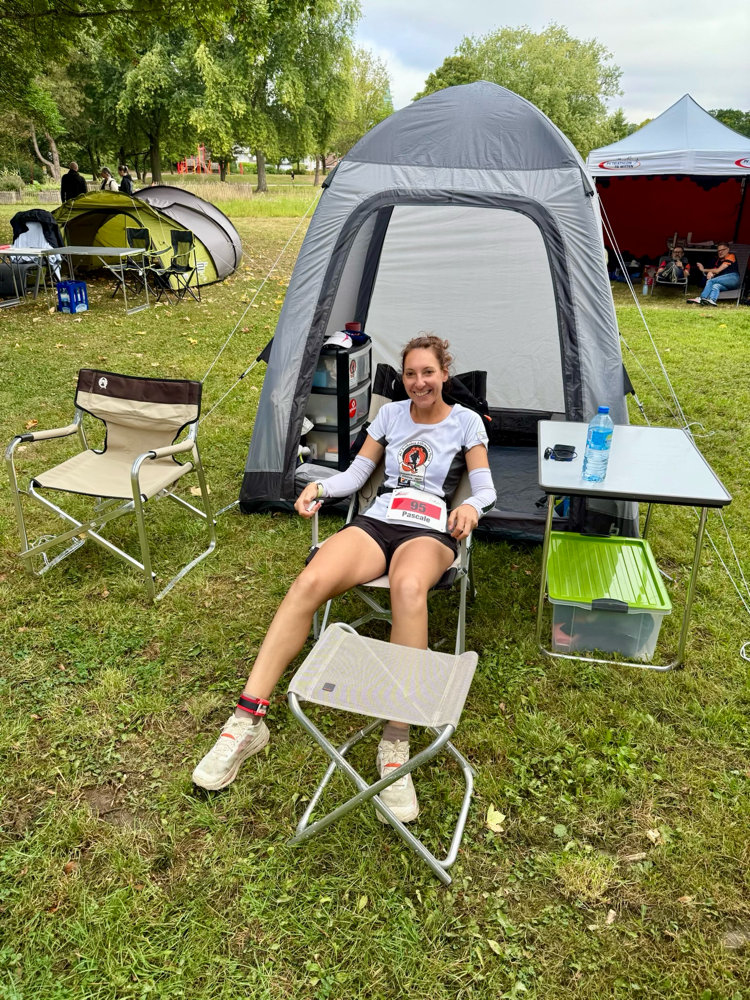
Then the time came to travel, pitch the tent and install the furniture. The weather forecast predicted temperatures over 30 degrees, thunderstorms and very high humidity. I love heat and often run in very high temperatures, even over 40 degrees. But with very high humidity? I didn't worry too much about it and I tried to look forward to the start. After all, everything was in place, the atmosphere was right, the organisers were very nice, my crew lady was highly motivated. And what about me? The optimistic, mindful snail from the Mäschder Drehwurm was nowhere to be seen. And the strong „Big Douglas fighter“ of the previous training weeks? GONE! And so there I was at the start: full of doubt, without any focus, with a queasy feeling in my stomach. 3, 2, 1, RINGING BELL!
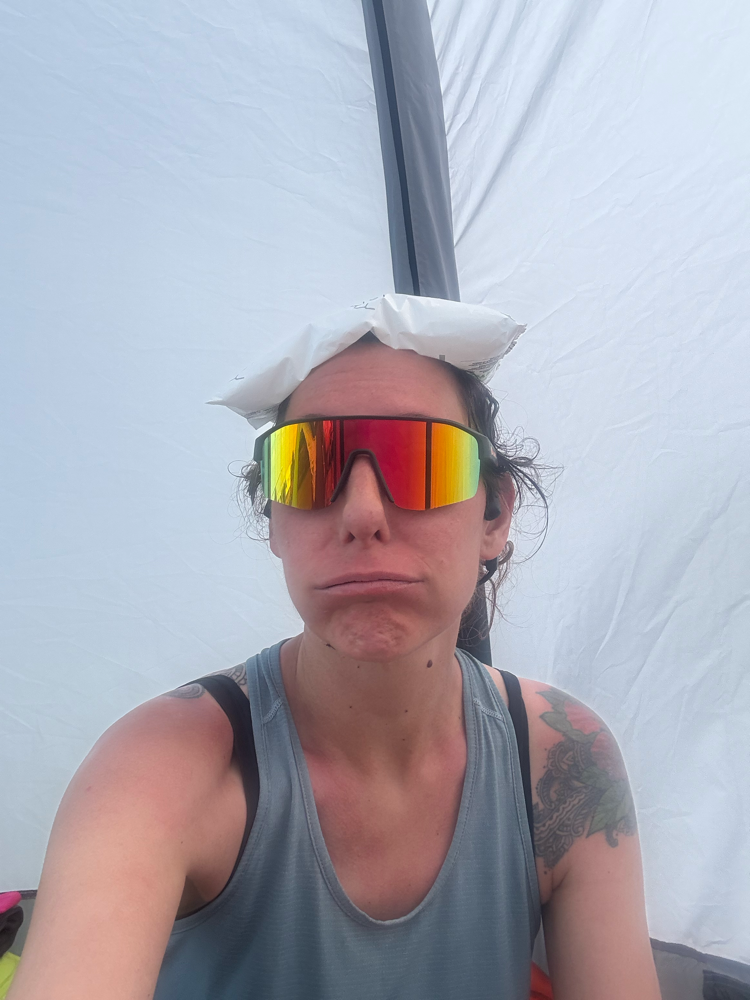
The run was pure agony for me. From loop 4 onwards I was plagued by severe side stitches and I simply didn't enjoy the run. By now it was 33 degrees and it kept raining. Although I was still running loops in under an hour and maintaining a consistent pace, running was more exhausting than usual. It was disastrous that I lost a lot of fluids and drank relatively little water. Not to mention food — I could hardly swallow anything. After 10 hours, the stitches were becoming increasingly severe. I had hardly eaten anything - apart from the fat fly that flew into the middle of my throat and got stuck there - and I definitely hadn't drunk enough.
RINGING BELL: Loop 11... I completed this loop in 58'48, realising that I wouldn't be able to run another loop in under an hour. In addition to the side stitches, my breathing rushed like an echo in my ears.
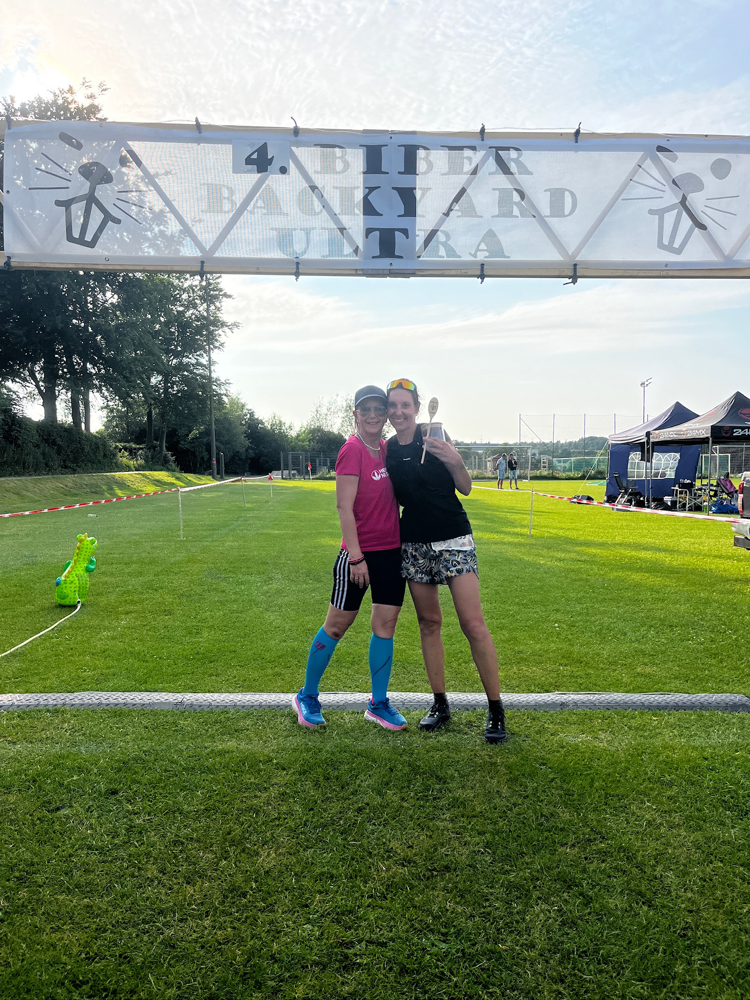
RINGING BELL: Loop 12… I stayed sitting in my chair with a heavy heart. Seeing everyone else start running was devastating and frustrating. That was the last straw. I managed a total of 11 laps/hours, thus covering 72 km with 1,300 metres of elevation gain. I was not the strongest beaver lady, but I was badly bitten by the beaver and finished!
It was a total disappointment, I was so angry with myself and I had a lot of negative thoughts buzzing around in my head: "Is this why I trained so much and got up at 4 am? Just to run 72 kilometres? That's the equivalent of another training run at best!" I was frustrated with myself, and the stomach pains were still there after a week, so I went to various doctors and had some tests done. Physically, everything was fine — there wasn't even minimal inflammation in the gastrointestinal area. My blood tests were perfect. I wasn't lacking energy either. After I told my doctor the whole story about the Backyard Ultra and my symptoms, she said to me:
"I can't prescribe you any medication as you are completely healthy physically. But I would prescribe more goodwill and tolerance towards yourself. You're putting yourself under so much pressure that it has to show somewhere, and in this case it's very often the stomach."
Could it really be stage fright and pressure? I decided to get to the bottom of it. I analysed all areas of my training very carefully and finally consulted Cloé Guibal - préparatrice mentale, a mental trainer. At the same time, I regained my positive drive and energy. I continued to pursue my goal with the motto „I f*** trained for it!“.
I refused to accept this „defeat“. So, I searched for a new race at the end of August, which wasn't easy. I finally came across the Bottrop Ultra Run Festival. There was a choice between a 24-hour format and a Backyard format with a clearly defined end after 24 hours. I opted for the 24-hour run and set myself the goal of running 100 miles in 24 hours. Unlike the previous runs, this one was completely flat and took place in a park, with a very short lap of just 837.7 metres (compared to 2.6 km for the Mäschder Drehwurm and 6.7 km for the Backyard). Running 837.7 metres in a circle over and over again for 24 hours… Nice! But this also meant that I would continue to train for the next two months, including in Andalusia during the holidays at +40 degrees.
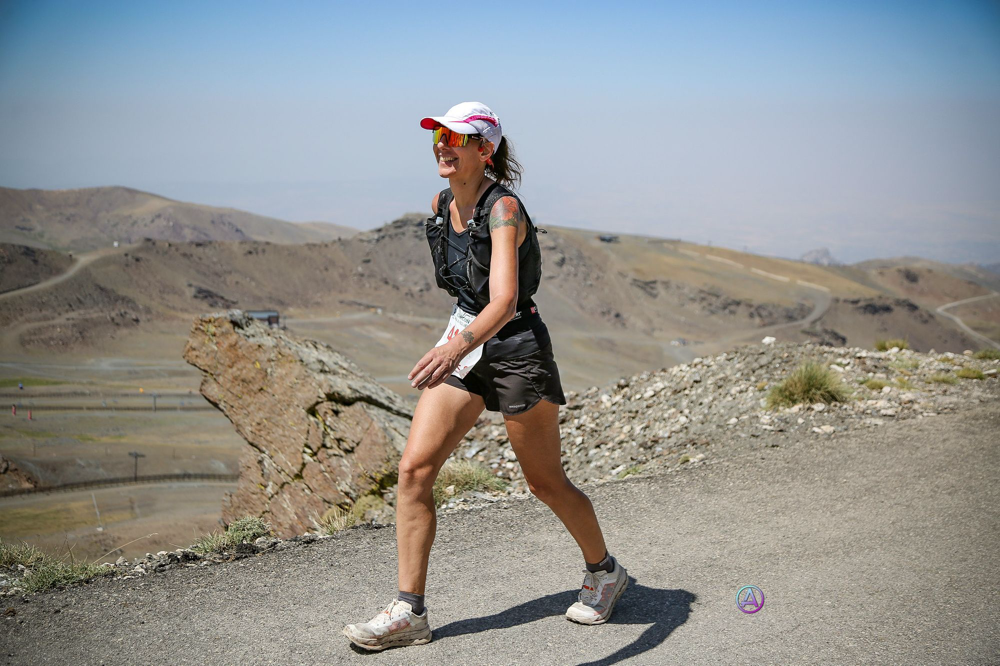
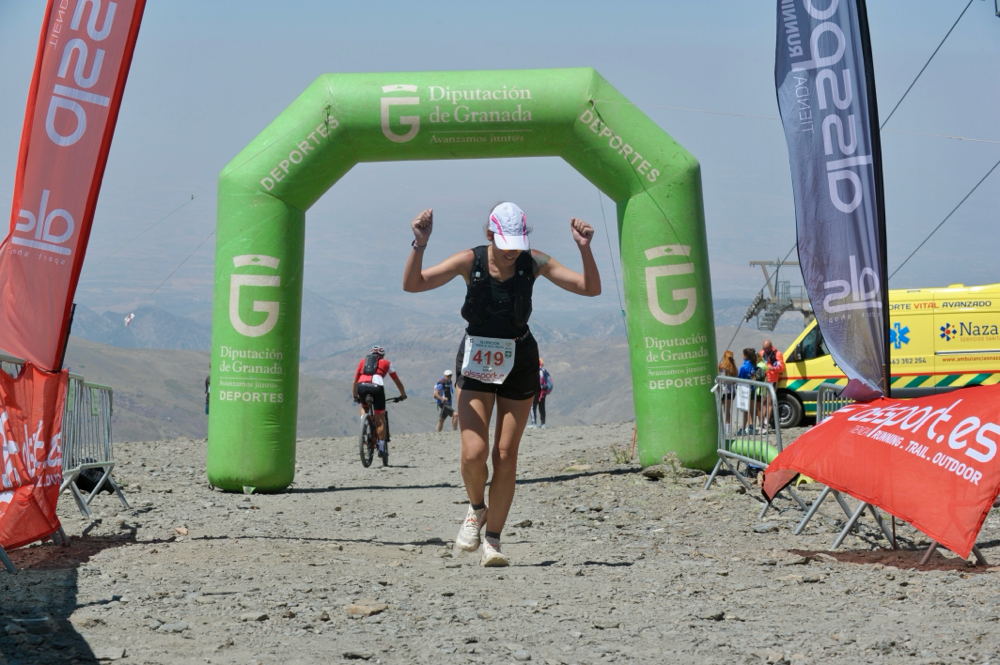
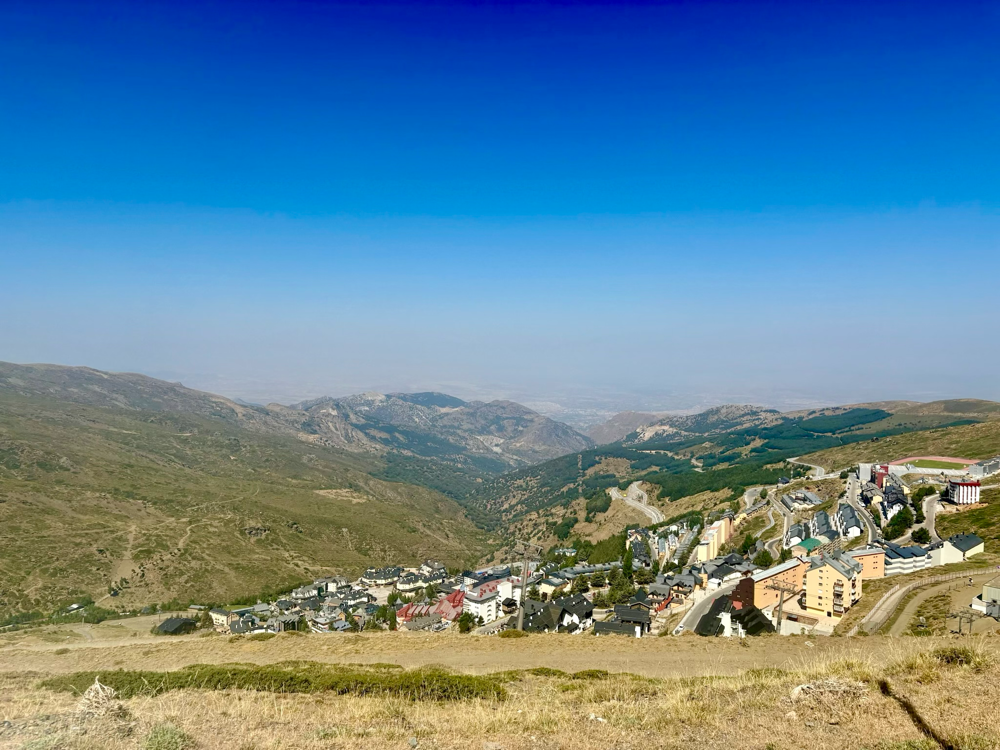
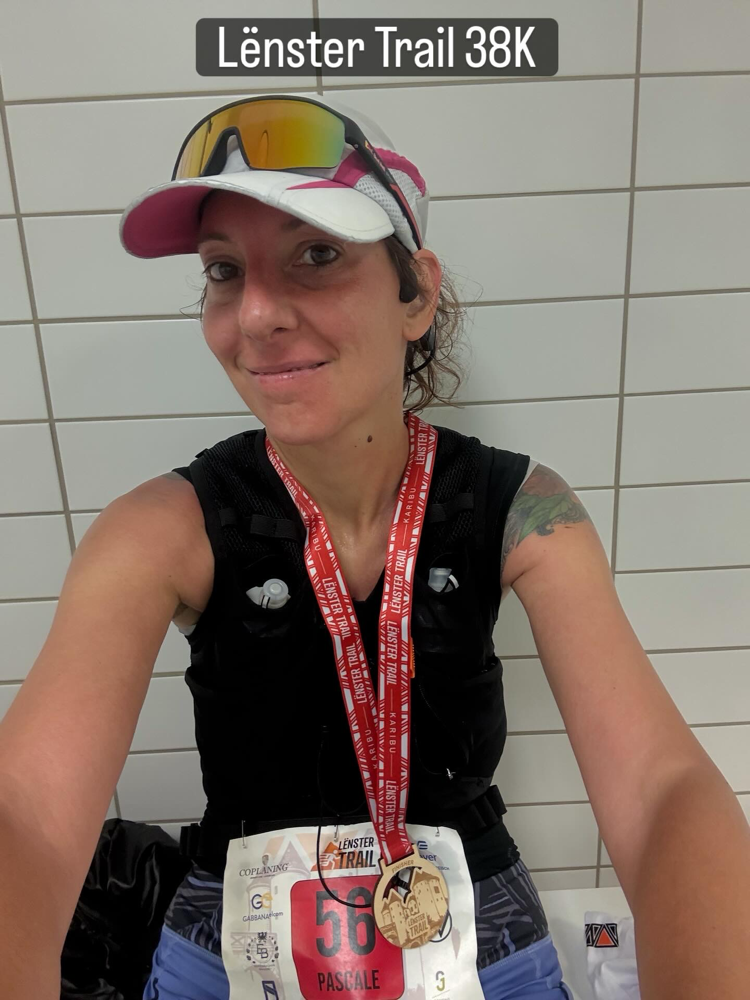
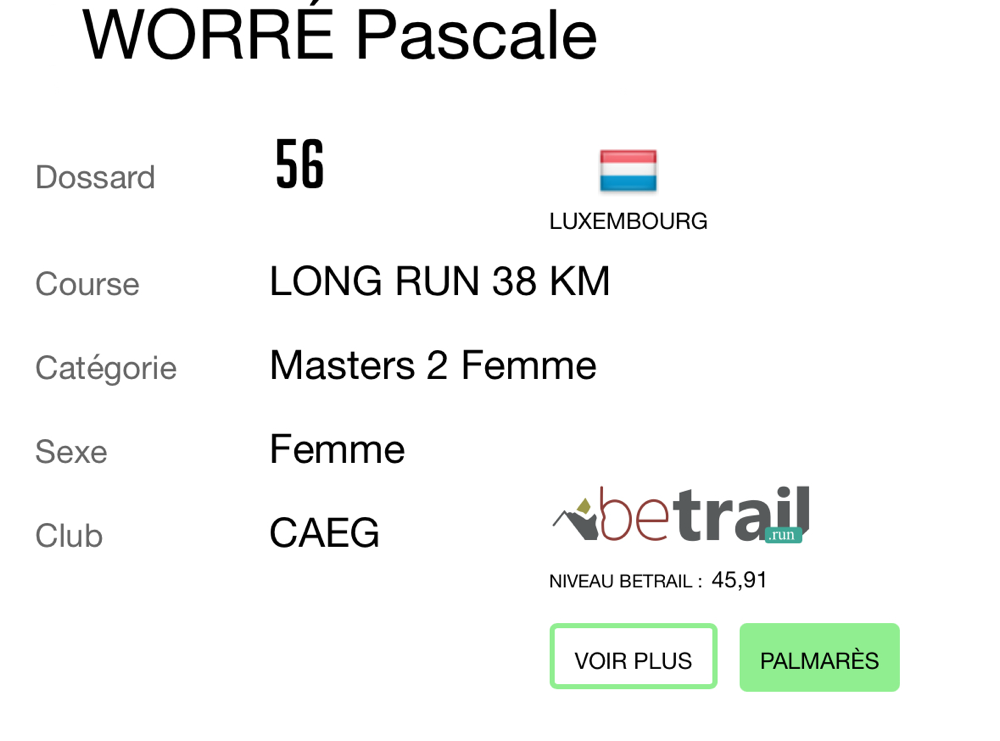
From then on, a new element was the mental training with Cloé Guibal. Simply by talking through my thoughts and actions in the lead-up to a competition, I identified many basic factors and was able to establish a pattern. In July and August, I took part in two more races: the Lënster Trail 38km and the Subida al Pico Veleta (50 km, with an altitude difference of 2,700 metres at an altitude of 3,400 m in 35-degree heat). This allowed me to closely observe my performance in specific situations.
Here are my conclusions: As soon as I take part in an official race, I am overcome by the feeling that I don't want to take part. I feel queasy and unwell, I can't eat, and my legs feel like lead. Even a few days before the race, a certain sequence of thoughts and actions begins. One day I feel strong, well-trained and motivated; the next, everything can be negative. I don't feel adequately prepared and I get the impression that everyone else is fitter, or has trained less than me, and is still better. I compare my training sessions with others' and lose all motivation. Rationally, I know these thoughts are completely stupid, pointless and unnecessary, but they still manage to get through and trigger this pressure. There's absolutely no reason for it, though, and I don't really care because I don't necessarily want to win. However, I'm not a so-called "fun runner" who runs in a group or alone just for fun. I have certain expectations, and I know I can achieve them. There are also runs where I am completely focused and where this pressure is not so strong. In those moments, I just run in the present, with passion and skill. I don't think about what will happen. It just is. Why can't it always be like this? Are there any tricks I can use to avoid this pressure?
During my sessions with Cloé Guibal, I learnt and practised various techniques. These included relaxation techniques and visualisation, as well as cognitive methods based on routines and fixed processes. I was already familiar with some of these techniques, such as visualisation and using music, the latter of which plays a very important role for me and is essential for my mental well-being. However, motivating myself with an inner monologue is completely ineffective — in fact, it just makes me angry. Routines and fixed processes, on the other hand, are very effective, and I put this technique into practice as I progressed.
„I've got to lose this skin I'm imprisoned in“(The Clash)
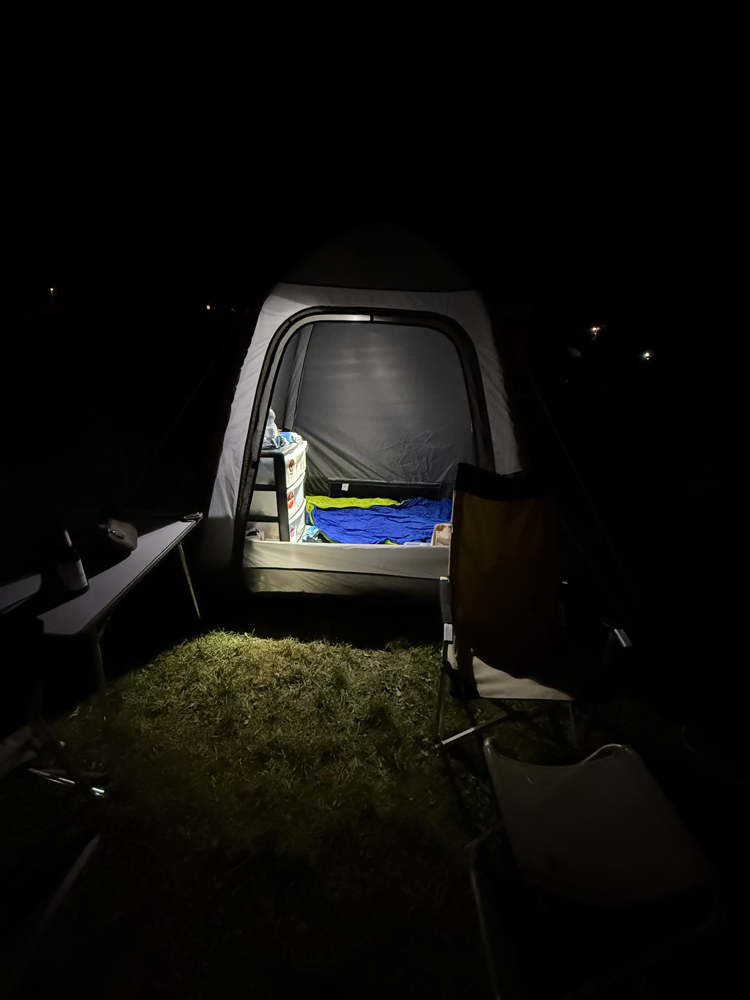
On 28 August, I travelled to Bottrop with my partner Mike and we set up my camp the day before the race. No comparisons with other training plans, no doubts, no thinking at all. I was really looking forward to the event. The goal remained the same: to run 100 miles in 24 hours. But I didn't think too much about that either.
At 11am on Saturday, I set off on the route — or rather, for one lap. I had a rough schedule that I intended to adhere to for the first 12 hours. The weather was mixed at first, but it was dry and pleasantly warm overall. I ran lap after lap, and suddenly I noticed that the number of laps I had run didn't match the distance recorded on my watch. During a 24-hour run, it's usually only the laps that are counted, regardless of how many additional metres you run due to changing sides of the path, going to the toilet, or to the camp. This irritated me. As I was using the number of kilometres on my watch as a guide, not the number of laps, my schedule was no longer correct. At that moment, I could feel the doubts and negative thoughts creeping up again. I was angry, angry with myself, angry with the number of laps, angry with the number of kilometres. I had now completed about 12 hours and the long night was approaching. My partner was there too and realised that I was becoming a bit downhearted because of the difference.
There was a group of people in the park who were playing loud techno music and cheering on the runners. Suddenly, this music reminded me of a funny video I once watched. I listened to the song for a while, and found myself running faster. It was as if I had turned a lever inside me. All my negative thoughts transformed into positive energy. I looked at the clock — it was midnight.
The night flew by. I ran at a steady pace, fully immersed in the present moment. I was happy every time I ran past the refreshment stand; the volunteers were always kind and encouraging, and very helpful. During the night, however, my gastrointestinal tract refused to take in any food, so everything that went in my mouth came straight back out again. I didn't feel any pain though; I just had to go to the toilet as soon as I ate or drank anything. I simply accepted this as a fact and didn't see it as negative; instead, I found an appropriate solution. I regularly took salt tablets and continued to eat and drink small amounts. The catering was quite good, so I always took something small with me. I also felt that I had a blister on my foot which was getting thicker and thicker. Again, this was purely an observation, not a negative judgement. I stopped briefly, changed my sock and treated my toe, then carried on running.
I can't remember exactly when I suddenly asked myself if this kind of running wasn't a bit extreme. After all, you run in circles continuously, even all night long, without sleep, with blisters, digestive problems, and not to mention several abrasions to your skin. Shortly afterwards, I felt a strong sense of fulfilment and thought that there was nothing I would rather be doing at that moment. So was that my answer to the question?
The next time I looked at the clock, it was 5am. The sun would be rising soon and I drank a non-alcoholic beer for breakfast. I had now worked my way up from 15th to 8th place and I was still running at a slow but steady pace. I had no problems keeping up the pace and suddenly I was in 7th place, then 6th and 5th. I was in a really good mood and still felt very comfortable. Now I was determined to keep going, maintain my pace, defend my place and complete the 100 miles. By now my watch was showing a difference of 6 kilometres, but that didn't bother me anymore.
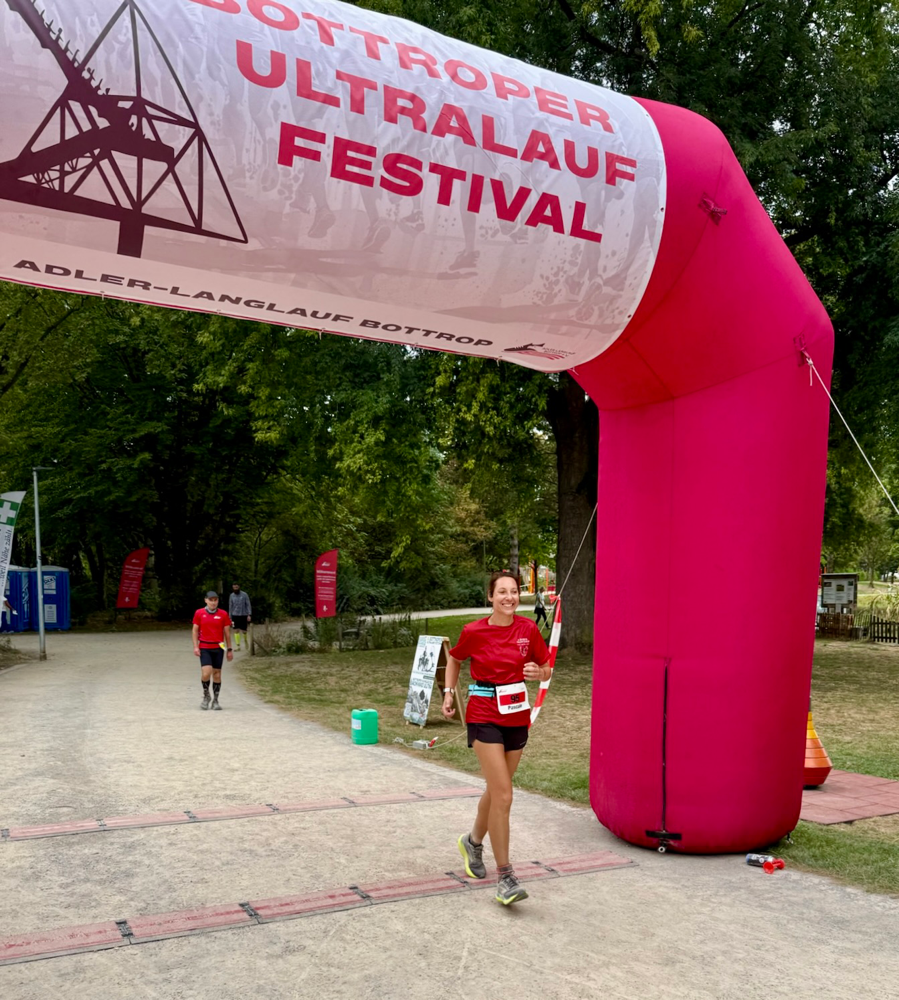
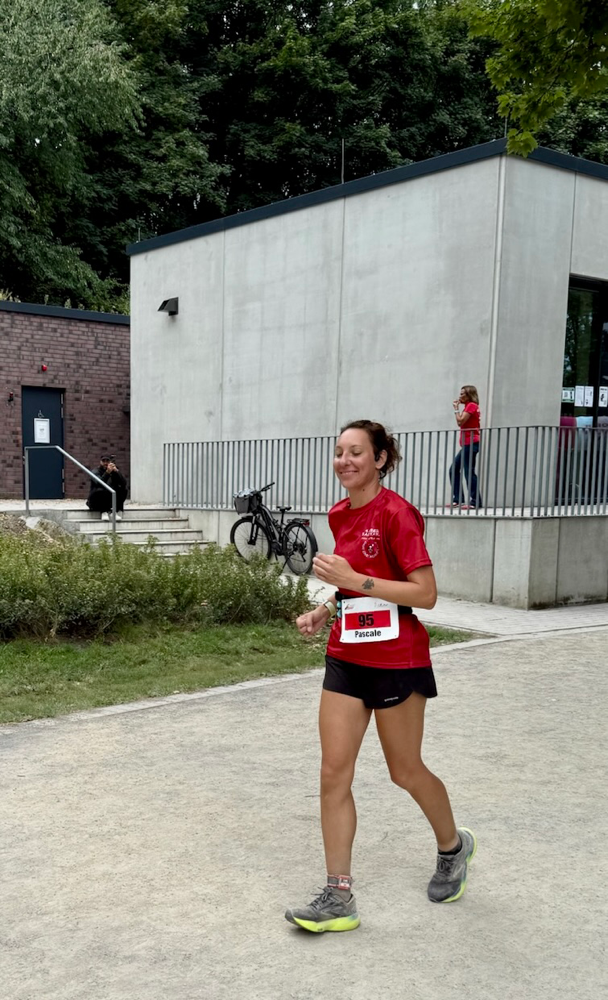
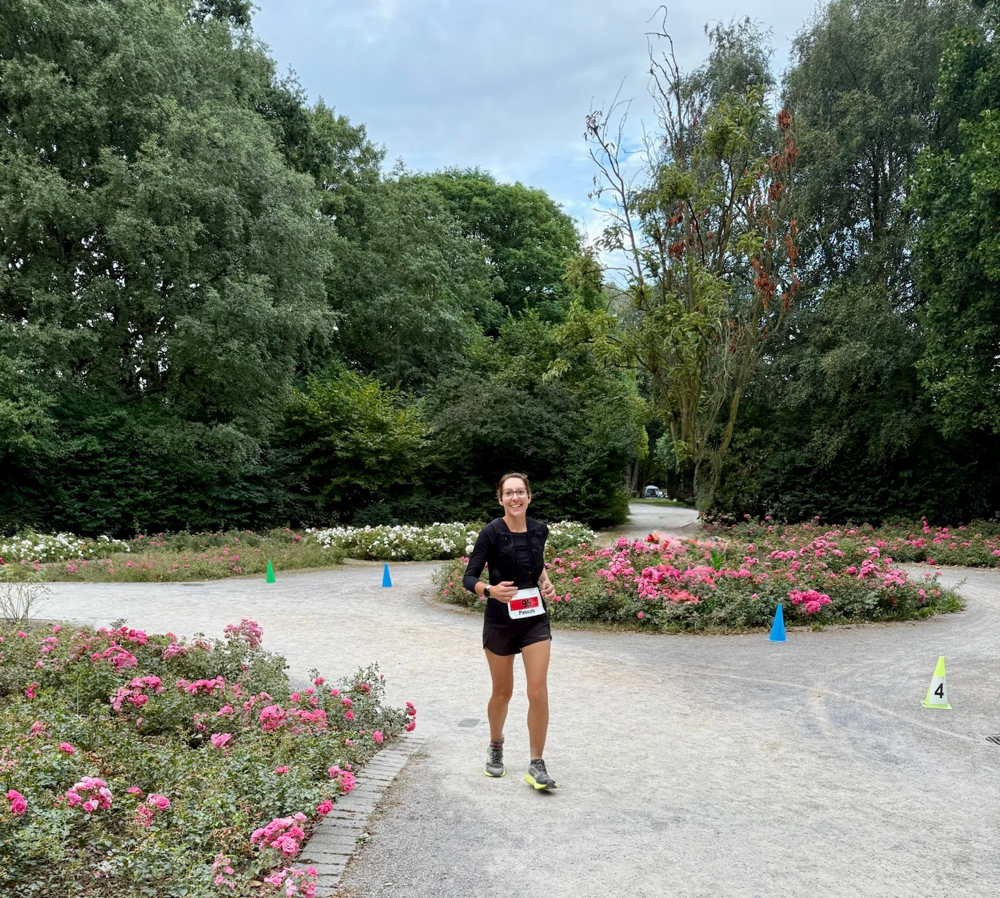
It was 10 o'clock: only one hour left to run. The emotions started to boil. I could feel my eyes getting a little moist and tears were running down my face. My watch was now showing 160 kilometres. Then it was time for the last lap! My watch showed 166.6 km; officially I did 189 laps and 159.69 km according to the official lap count. I came 5th in the women's category, 2nd in the W45 category and 12th overall out of 89. And yes, "I f***ing trained for it!!!" I still felt good; at that point, I could have run a bit further. However, after the shower, my willingness to run changed. Even climbing onto the podium was difficult. Taking part in the Bottrop Ultra Run Festival was a really good choice, and I'm glad I did it. The good mood and motivation of the helpers and organisers, as well as how helpful the people were, made the run a very nice experience.
In hindsight, I primarily achieved my goal, but it goes far beyond the mere number of kilometres and the ranking. I started my running year with uncertainty and painful injections. My Backyard Ultra, which was very important to me, ended in disappointment. However, it was precisely these two initially negative events that led to a significant change. The pes anserinus syndrome made me train more consciously and variably. I learnt to 'loop', which enabled me to run at a constant pace for a long time without pausing or walking. I continue to divide my runs into 6.7 km loops as this provides a good guideline for my pace and nutrition. This has become an integral part of my running training. I use visualisation and cognitive tricks to train myself to eat and drink regularly so that it becomes a fixed routine, meaning I no longer have to force myself when it is already too late.
My unsuccessful attempt at the Backyard Ultra meant that I was able to transform negative emotions into positive energy, enabling me to carry on stronger than before. Giving up and failing to achieve my original goal was not an option. However, this required me to identify a sore spot, examine it closely and look for solutions. I had to free myself from that skin that kept me imprisoned in specific situations like competitions and major challenges, as the song by The Clash says: I've got to lose this skin I'm imprisoned in.
Looking back at all my races, I can conclude that not the "easy" races made me a stronger person, but those runs where all sorts of things went wrong, where I faced big mental and physical challenges, and where I kept running until the end and crossed the finish line with a big smile on my face. This didn't make me a faster runner, but it did make me stronger, more persistent and gave me a lot of stamina, memories and stories to tell.
This whole year was just the beginning of a new chapter for me. Sometimes I will find myself in situations where I put myself under pressure. But maybe not. In any case, there will be plenty of moments in the coming year when I will realise this. Spoiler alert: the Mäschder Drehwurm is also offering a 24-hour race in April 2026. In July, it will certainly be hot again in Andalusia for the Al Andalus Ultimate Trail. Who knows how many loops the snail will do at a Backyard Ultra next year?