
Extreme heat running
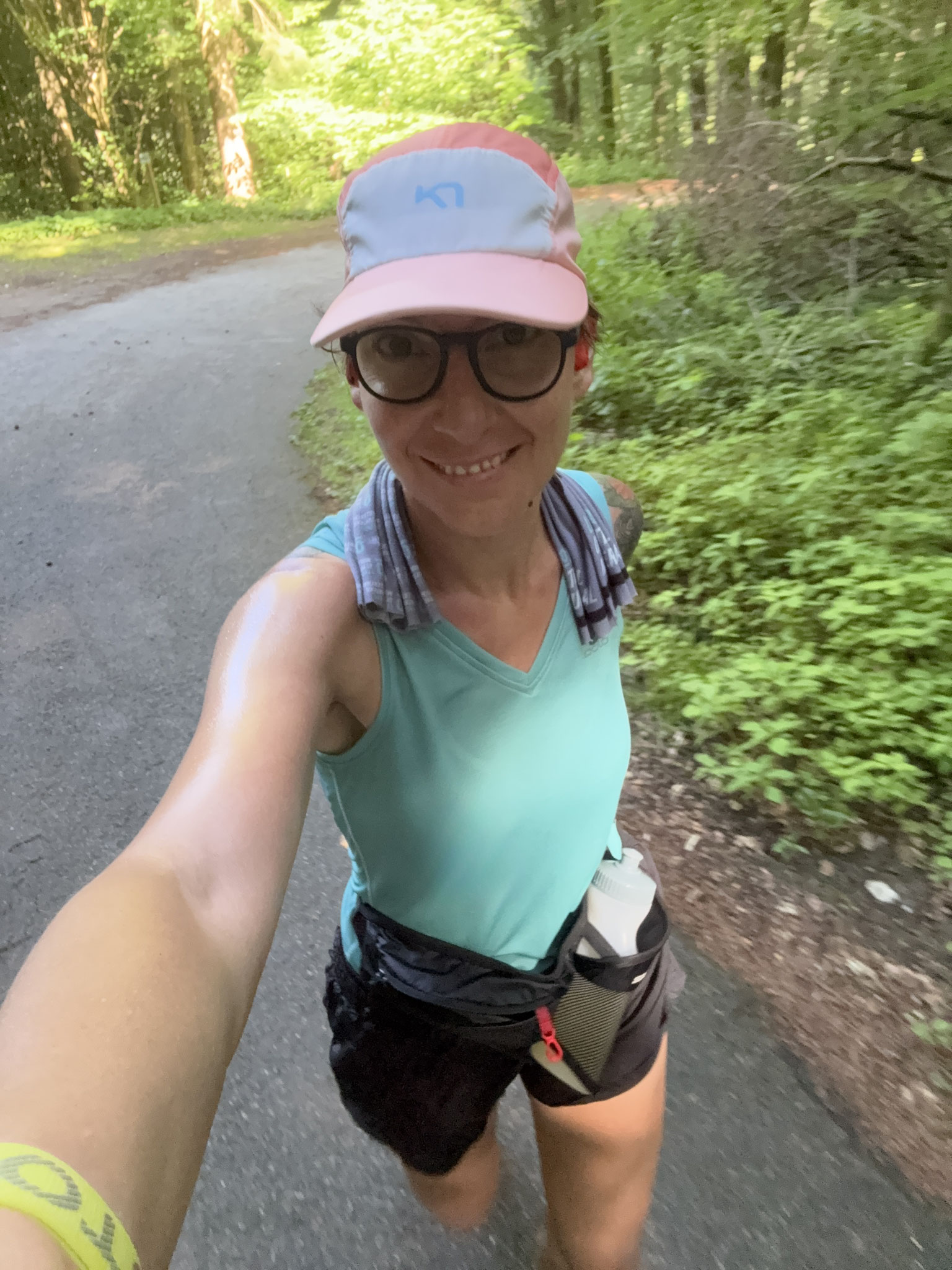

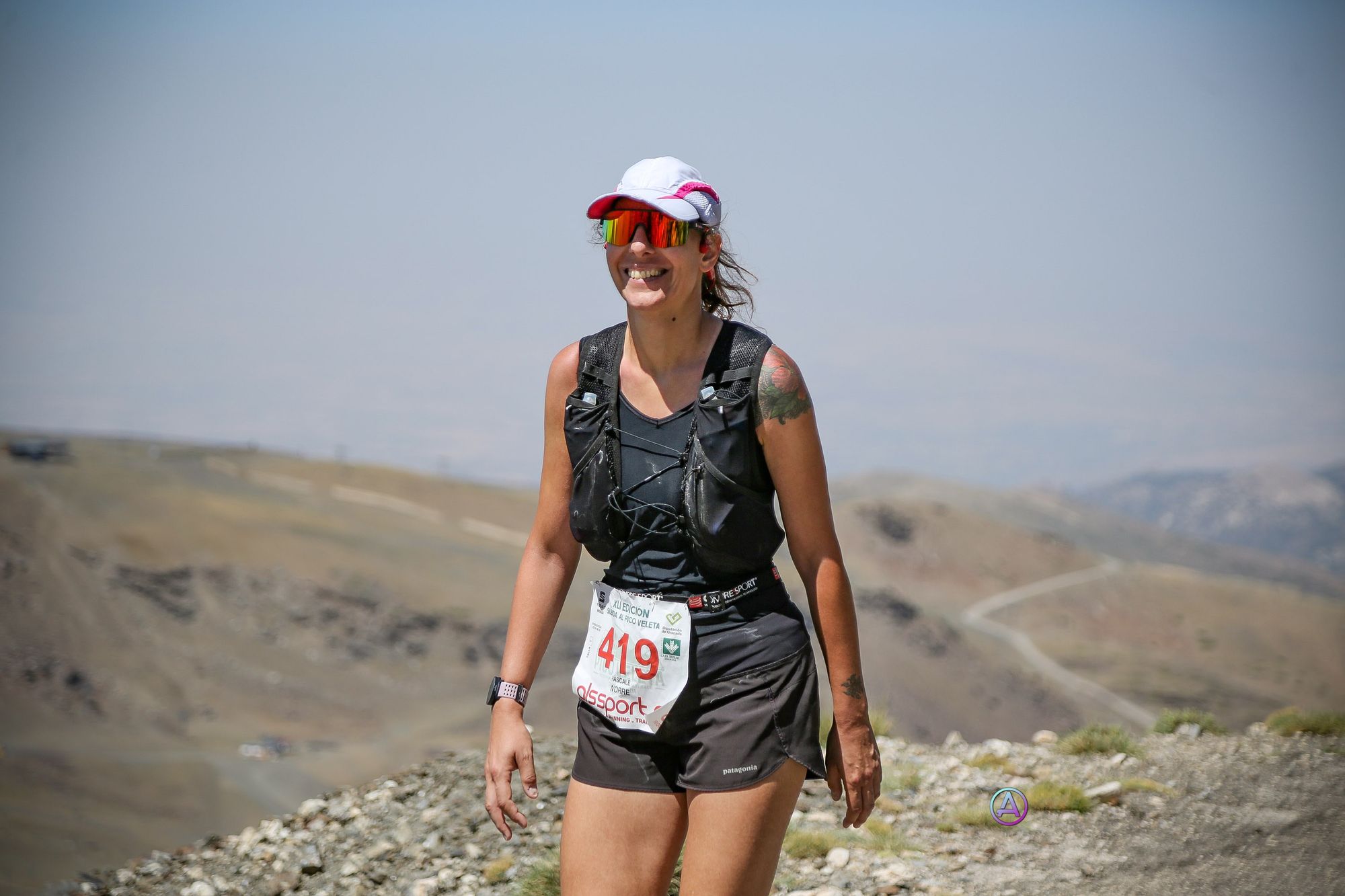

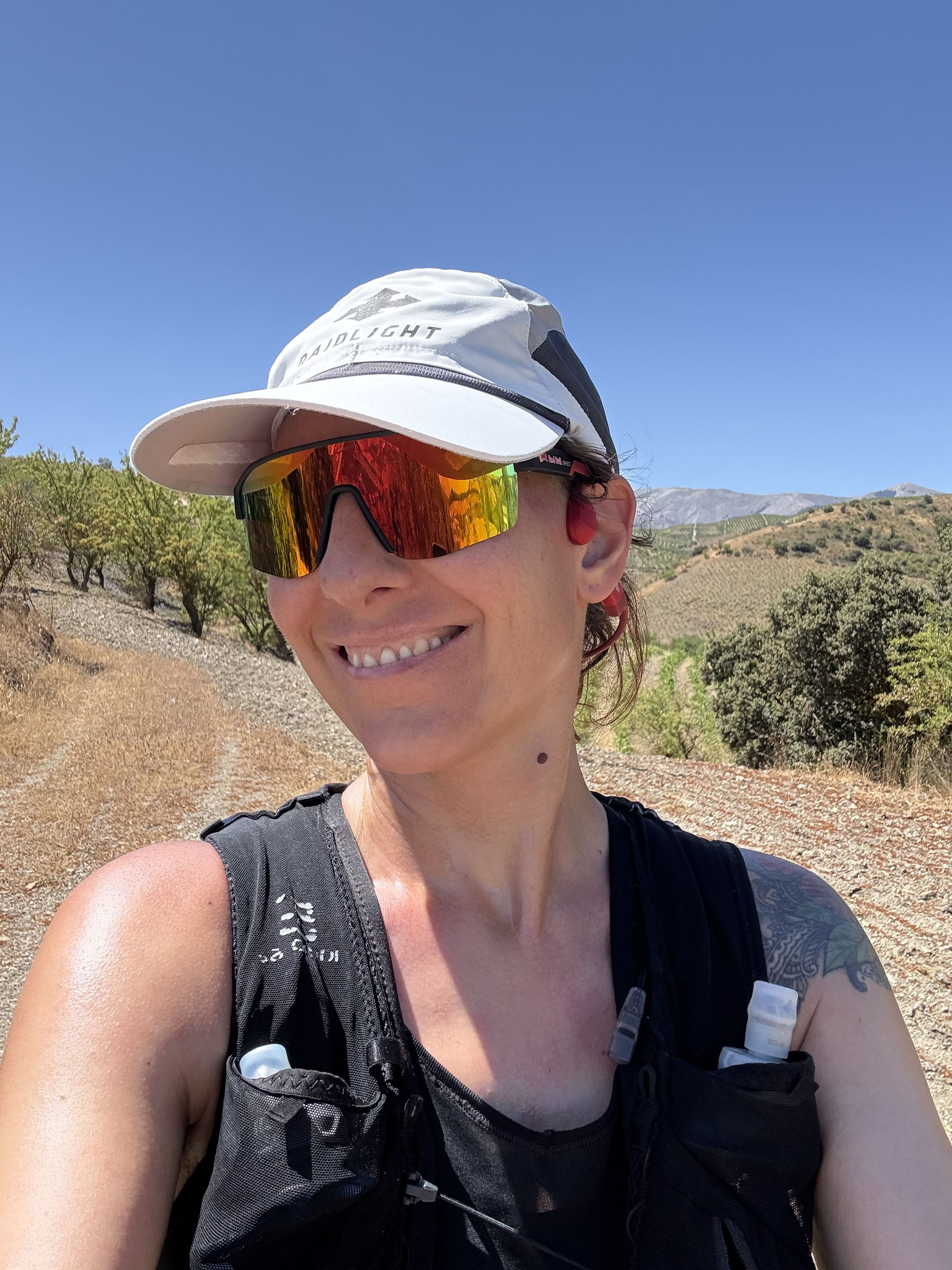


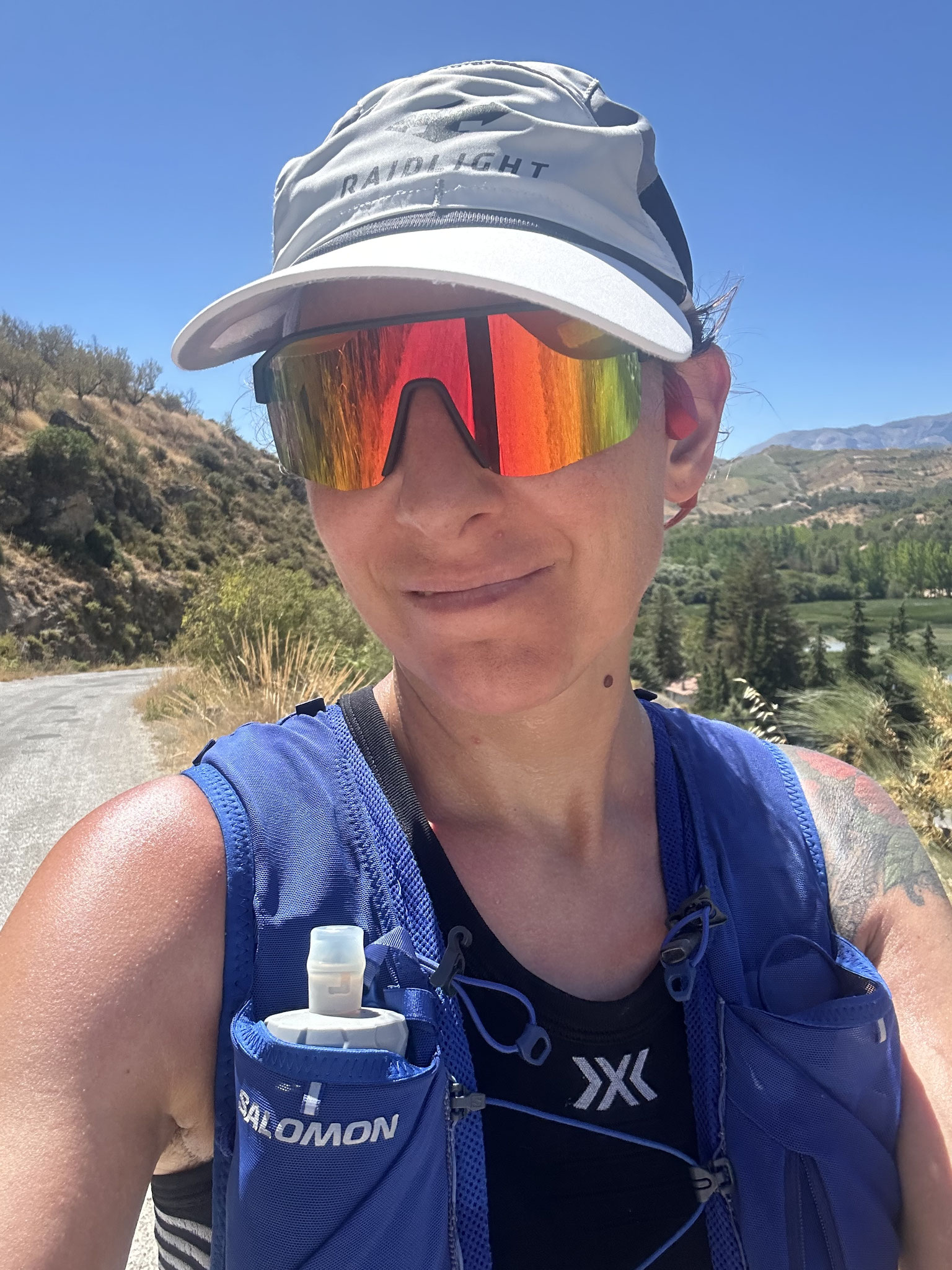


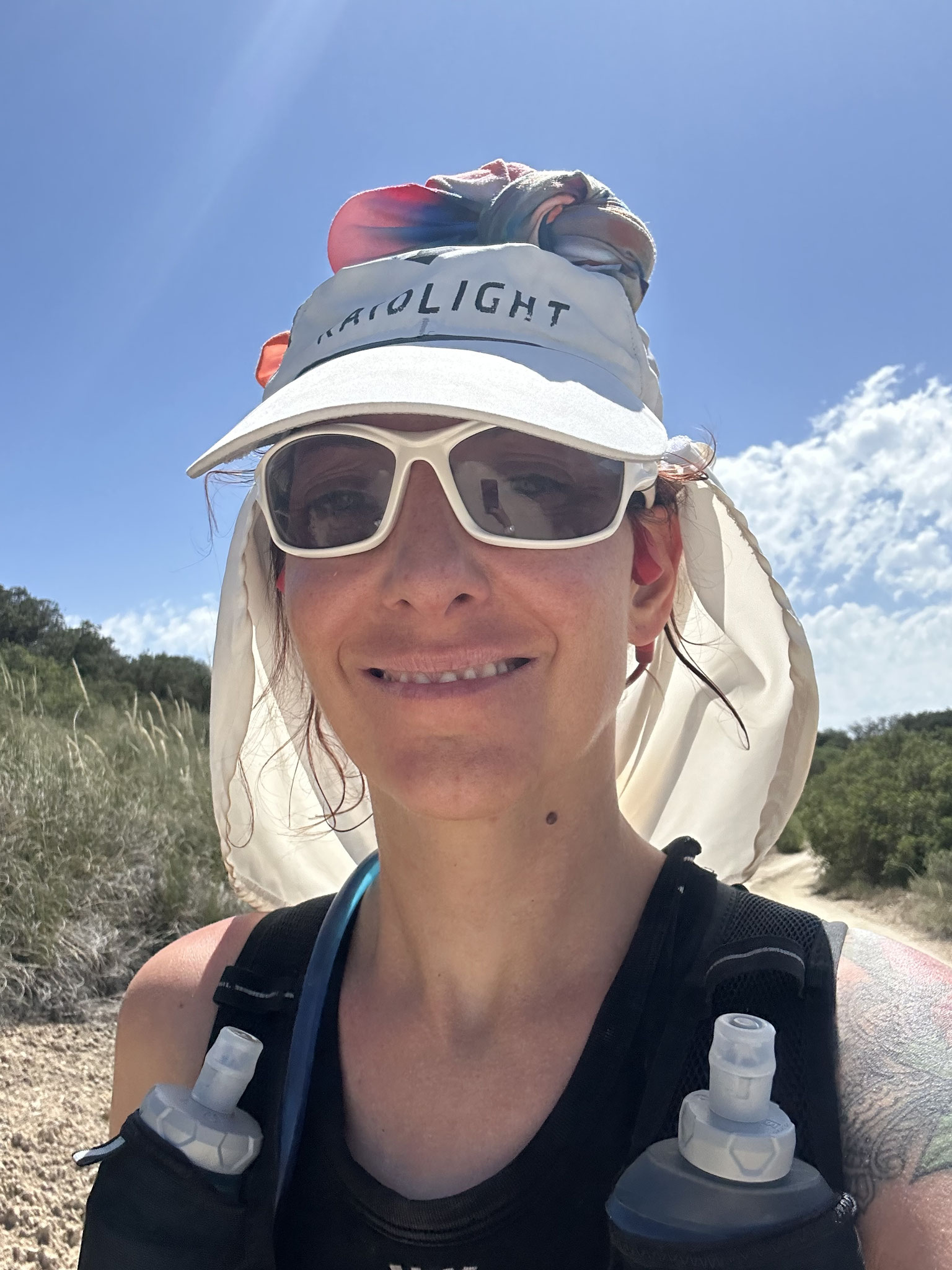


Heat training Part 3/3 completed with 95 kilometers.
People keep asking me if it isn’t dangerous to run in such high temperatures, especially ultra-distances.
Of course, high temperatures create extreme conditions and pose a real challenge for both body and mind, just like high altitude or very low temperatures. Running off without a plan and just carrying a little water would be absolutely reckless and could indeed be very dangerous. That’s why my motto is to make sure I’m in optimal health, and I get checked out regularly. By the way, this applies to all my runs and intensive training months.
So how do I prepare for a heat training weekend as part of the Al Andalus Ultimate Trail?
1) Plan the route thoroughly -> Where are the water stations, and where can I refill my bottles?
It’s not always possible to refill water everywhere. That’s why I plan my route in advance and specifically look for places where I can either refill my bottles or buy drinks.
Even if I carried two water bottles and a backpack (which adds a lot of extra weight), I’d only have about 3–3.5 liters—which isn’t enough for a +40 km run in temperatures over 30 degrees!
If there are no water stations, stores, gas stations, or bars, I take my car with drinks and plan the route around running past the car repeatedly so I can drink and refill.
2) Start time and weather forecasts -> When will it get really hot, and is there a risk of thunderstorms?
I usually start my runs by 9 a.m. at the latest. But on long runs lasting several hours, it’s bound to get hot, since I’ll be running into the midday heat one way or another. However, this gives my body more time to gradually acclimate to the heat. Starting in the midday heat at 35 degrees would be rather unfavorable for me, as that would be too much of a shock to my circulatory system.
On regular workdays, training in very high temperatures is therefore more difficult, since I can only run either during my lunch break or after 5:00 p.m. So there’s only one option: get up between 4 and 5 a.m. and plan a shorter distance of no more than 15 km. Running late in the evening isn’t really an option for me, since I go to bed early. For evening runners, of course, this would be a good alternative.
When temperatures are very high, there’s also a higher risk of thunderstorms. Anyone running on trails in the woods should keep this in mind as well. That’s why I always check the thunderstorm forecast during the week and plan my runs accordingly. If there’s a high risk, I stay close to home and tend to run loops and/or take my car with me.
I once had to cut short a 67-km training run in the woods at the 60-kilometer mark because it started thundering and lightning very heavily. I was glad my car was right by the trail.
3) Equipment and essentials -> What can’t be missing on hot runs?
Here’s a list of things I always make sure to have on my hot runs:
- Sunscreen
- Tape (for rubbing sores)
- Protective balm/body stick (for rubbing sores)
- Headwear/Sahara cap/jungle hat
A quick note on Sahara caps and jungle hats: At running events, you increasingly see runners wearing Sahara caps or jungle hats, even in the rain, cold, and at night.
Of course, you can wear whatever you like, but Sahara caps and jungle hats are primarily designed to protect against extreme sun, heat, and insects. In rain and colder temperatures, I personally would opt for other (waterproof) headwear. But for hot-weather runs, my cap is an absolute MUST.
- Running vest and/or hydration belt
- Flasks/water bottle/hydration bladder
Over the past few months, I’ve been deliberately training with a hydration belt and a hard-sided water bottle, especially for the 24-hour races and the Backyard Ultras. But I’ve also discovered a great use for them during hot-weather runs that I’ll be putting to use at Al Andalus: for carrying ice cubes on the go.
Ice cubes are available at the aid stations, and a solid water bottle is ideal for storing them, plus one gets cool water to drink and help one cool down.
Your body also cools down even better if you cool your groin and legs in addition to your head and neck. In 2023, during the Al Andalus, I stuffed ice cubes into a tube scarf and attached it to my groin area on my race number belt. It worked wonders!
- Tube scarf (for cooling and wiping)
- And, of course, plenty of electrolytes and food (including salty snacks)
For stage races, you’ll need quite a bit more, but for my training days, the items listed above were my daily companions.
4) Pacing and Heart Rate -> How fast and how far can you go?
There’s a difference between training in the heat and training for a run under extreme heat conditions.
My 18 km interval run this week was more of a run that I was forced to complete in the heat, whereas Saturday’s 45 km run and today’s 23 km run were also specifically designed to prepare me for the heat in Andalusia. Of course, the interval run also had the side effect of serving as heat acclimatization training.
During the interval (8 x 5 min fast – 2 min slow), to be honest, I was running too fast on the first three intervals (4:39). I realized pretty quickly that I shouldn’t be running like that at 30 degrees, so I slowed down, stopped in the shade every now and then to cool off, and also drank plenty of water to stay cool. In this case, it’s better to listen to your body rather than push through a tempo run by the skin of your teeth. I still needed plenty of energy, recovery, and cooling off for the upcoming training runs, especially for the 45 km run.
In general, when running in the heat, it’s absolutely essential to listen to your body’s signals. It’s perfectly okay to rest briefly in the shade and walk for a bit now and then. I emphasize: in the shade! Because standing still in direct sunlight also carries risks (sunburn, overheating). Headaches, a rising heart rate, and even dizziness are warning signs! I always keep an eye on my heart rate and consciously kept it very low (45 km: 130, 23 km: as low as 115). This saves a tremendous amount of energy, especially when running for several days in intense heat. And besides, I’ll be on the trail for a very long time during Al Andalus, so the focus is more on running in the heat for as long as possible and being exposed to the sun.
5) Mental Training -> How do I cope with such extreme conditions?
For me, the main challenge in extreme heat is that there’s no escaping it. Especially when there’s no shade, as is the case with the Al Andalus, you’re simply exposed to the sun and the scorching heat—for up to 10 hours.
Only at the checkpoints (approx. every 10 km) is there an opportunity to rest briefly in the shade and cool off.
I would describe acceptance, awareness, and respect as the key elements. You can’t turn off the heat, so you have to accept it as a given and move forward step by step without overthinking it.
I also don’t believe anyone would participate in a race like this if they can’t handle the heat or don’t like it. I try not to view the heat negatively, but rather to be aware of it and to run and react according to its demands. That means being attentive, adapting to the circumstances, and having the necessary respect and reverence for this extreme challenge.
I applied the same approach during training. Today’s final run (23 km) was mentally demanding, since I’d already had two days of heat under my belt and my body was starting to tell me that it was slowly losing the desire to run in 35-degree heat. Since the last few nights were also very warm, I didn’t really cool down either.
But this running weekend was probably ideal under such conditions, since it allowed me to train for certain aspects of Al Andalus exactly as they’ll be.
6) Recovery -> How do I recover optimally after a run in intense heat?
Drink, drink, and drink some more... Of course, you lose a lot of fluid at such high temperatures, so you have to drink plenty even after the run—especially if you’re continuing the next day. Personally, I drink sparkling water, apple spritzer/orange juice spritzer, non-alcoholic beer, and still water.
It’s also important to cool down, so I stay out of the blazing sun and avoid any further physical exertion.
Otherwise, I do the same things I do after any strenuous training run: eat, put on my recovery boots, put my feet up, go to bed very early, and read and/or listen to music while mentally preparing for the next day, the distance, and the route.
As you can see, heat training involves much more preparation than just running around in the heat with a little bit of fluid.
And since this week was so nice, we’re in for another week of high temperatures and 100 kilometers—they’re even forecasting up to 39 degrees!