
24H RUN TELEVIE SCHËTTER




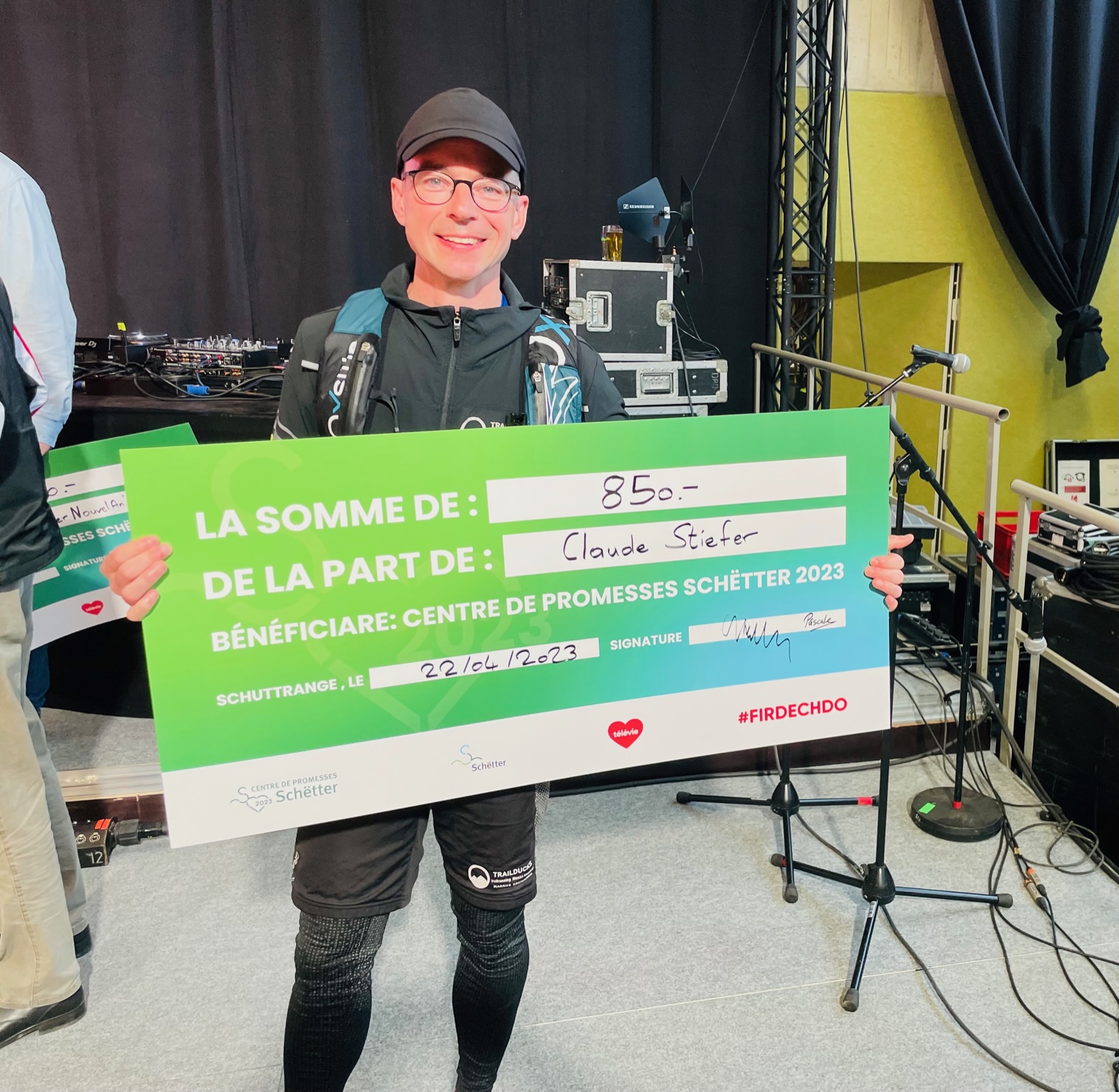
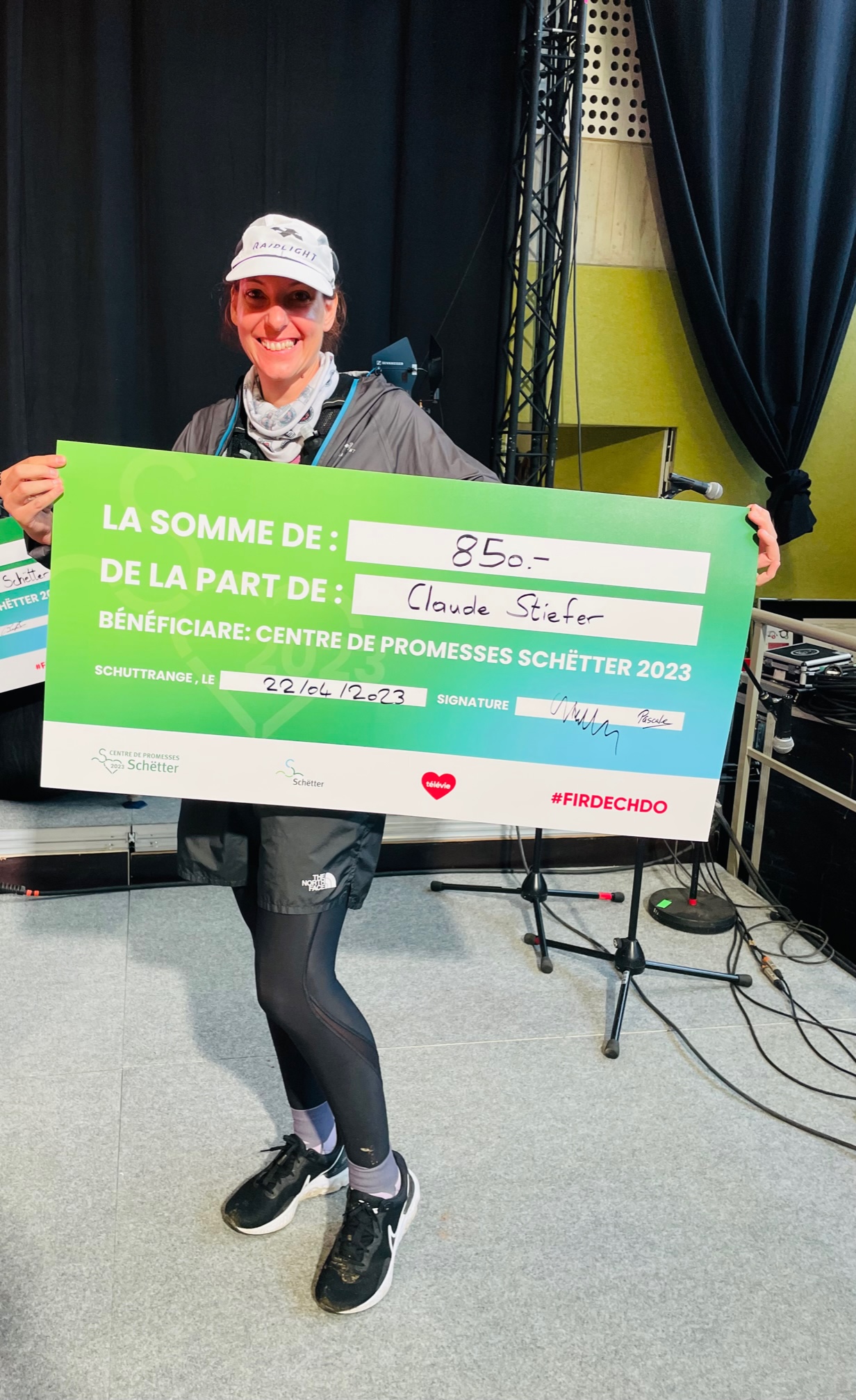
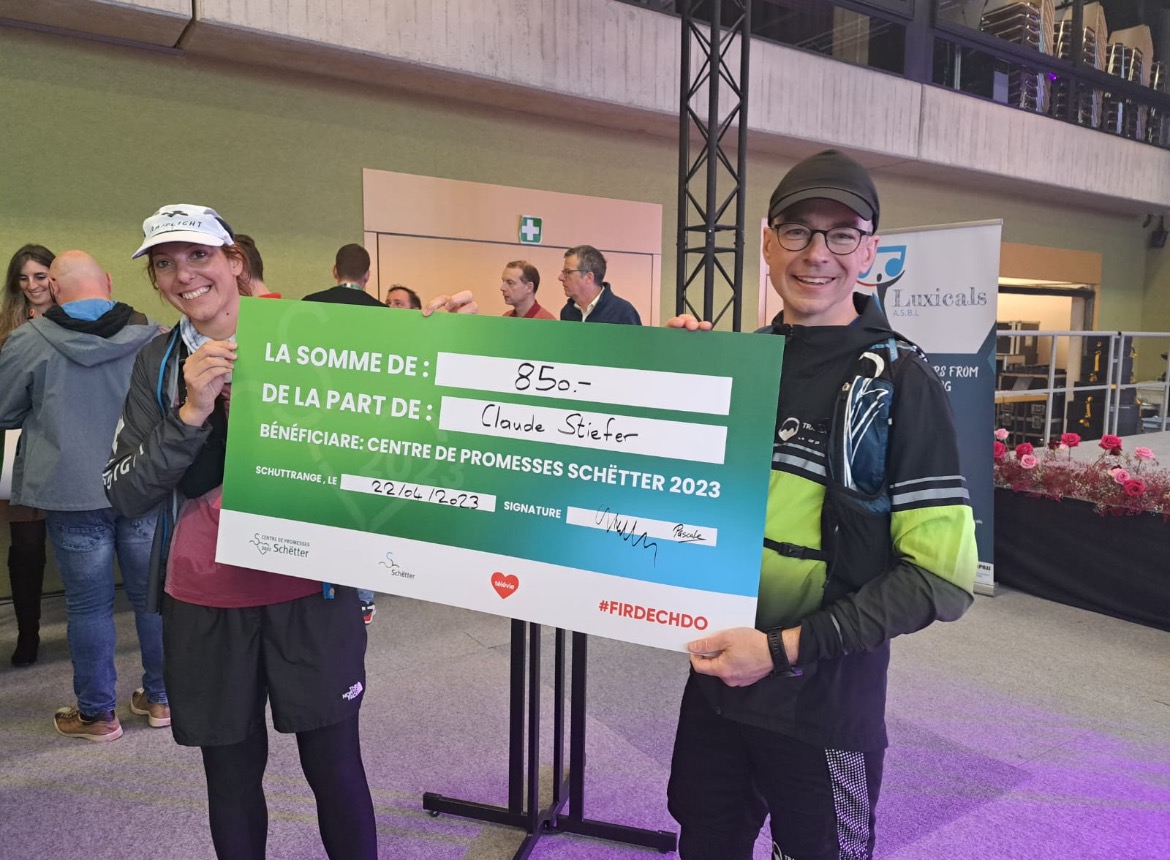
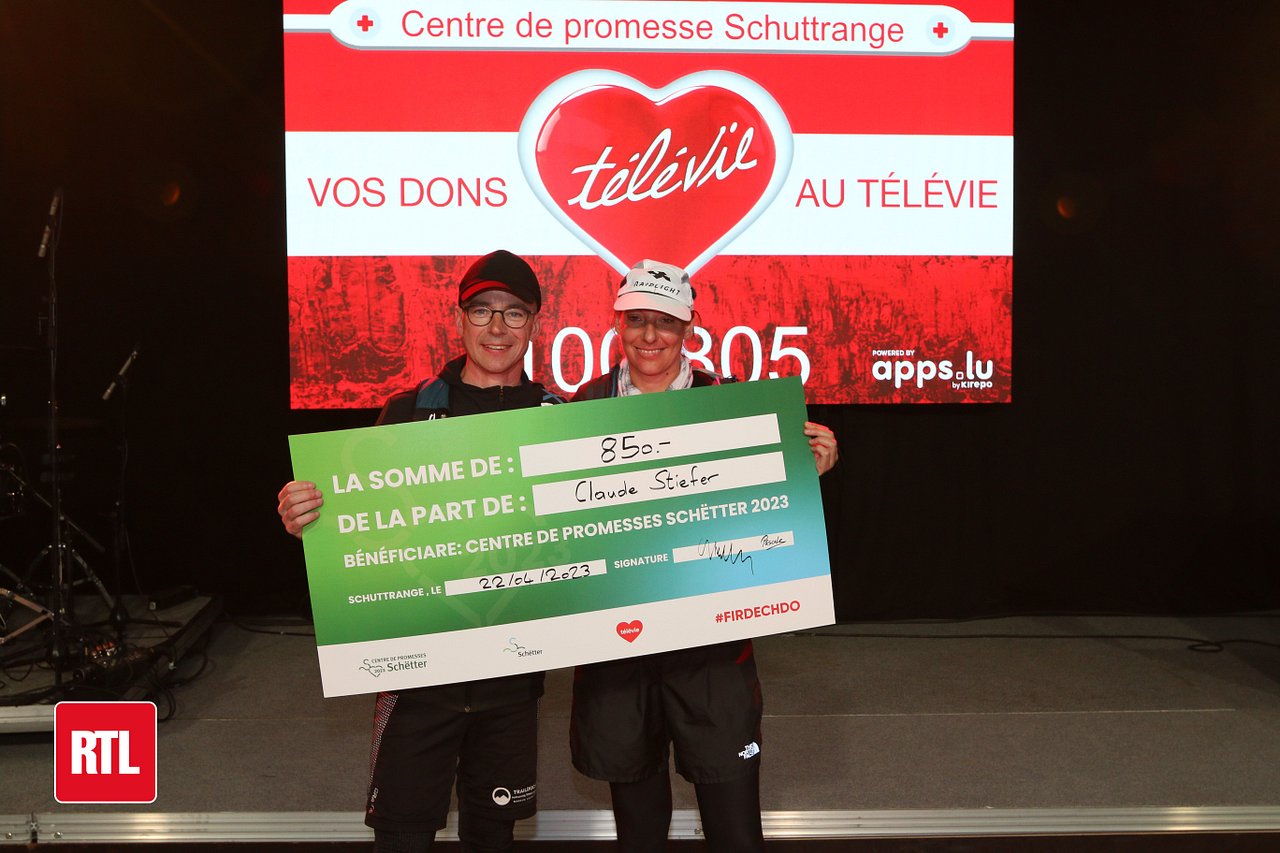


24 hours - 130 kilometres - 850 euros raised.
This was the final result after the 24-hour run. People often talk and ask about the performance and the results. But what lies behind these numbers?
What do you think, feel and experience during such an event?
The Télévie Schëtter 24-hour run in April 2023 was my fourth of this kind; the last one took place in December 2022, just four months ago. None of my 24-hour runs were official races; ultra runner Claude Stiefer and I were organizing them ourselves 'just for fun' and also were raising money for various organisations.
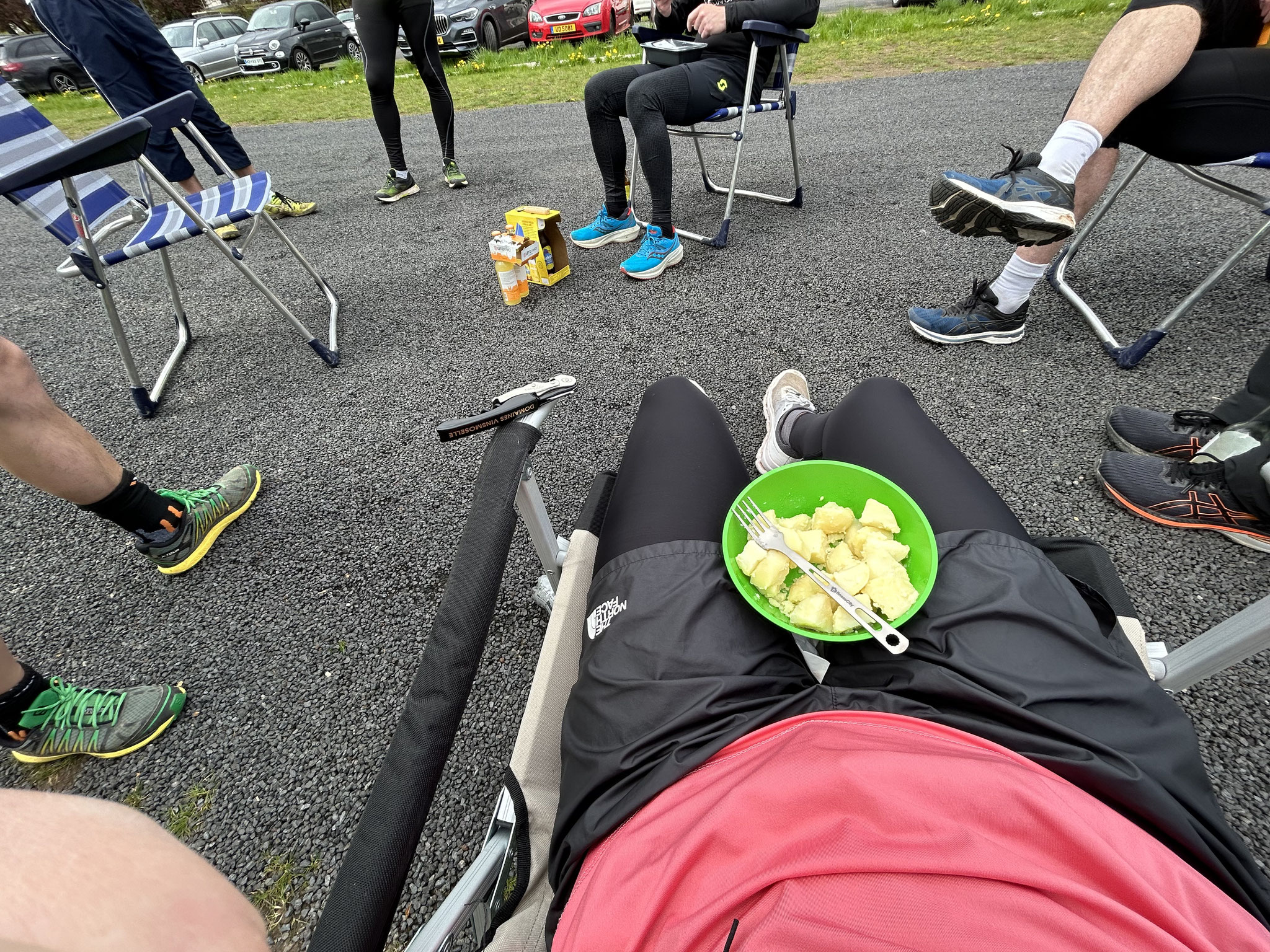
A 24-hour race has a completely different character to (+)100 km trail runs or stage races. The aim is to run as many laps (in this case each about 3 km) as possible in 24 hours with few breaks. During our 24-hour runs, we were responsible for our own supplies. All our food, drinks, and clothes were kept in a camper van in the car park. This meant that we could always fill our bottles, eat something or take a short rest. This was already a challenge for me. Knowing that I could lie down in a cosy camper van at any time was mentally challenging, especially at night when I was very tired and the temperatures dropped. During this run, I had to fight my tiredness and lack of sleep a lot. I had a very busy week, and on Friday I got up at 8:00. The run started at 18:00, so I had been on my feet for 10 hours. I hadn't really rested before the run. Another runner, Guy, started with us. He wanted to walk for the full 24 hours. Claude and Guy felt the same way as me. They had also been on their feet all day, but none of us were bothered; we were all looking forward to the start of the run.
But how does it feel to run the same short lap over and over again? Especially at night?
Unlike my ultra trail runs, there were no such beautiful landscapes or viewpoints to enjoy. I tried to focus on the running itself rather than the monotony of my surroundings. I looked out for certain 'highlights', such as the cows in the barn or the heron that stayed in the water all night. Conversations, of course, helped pass the time. It was a mixture of distraction and concentration. Rather than focusing on the hours ahead, I focused on the present moment and just kept going. But it would be too easy if I could always do this for 24 hours. The longer the run, the more ups and downs I experienced. The challenge was to see the "downs" as temporary and not get lost in them. Of course, I also enjoyed the 'ups' and those funny, fulfilling moments.
In December, when we ran for 24 hours in -13°C temperatures, we pushed our bodies to their limits. It wasn't as cold this time, but we had a heavy shower and thunderstorm right after the first lap, so we were wet from the beginning. During the night, the temperature dropped to 3°C, and it was very humid. This also generally has an impact at the performance, and when you're tired, you feel even more cold. The temptation to get into the warm camper was strong again. However, Claude and I ran all night, only taking a 20-minute break once. We didn't decide to take a 10-minute power nap until 6:00. We woke up after an hour and 20 minutes, still sitting.
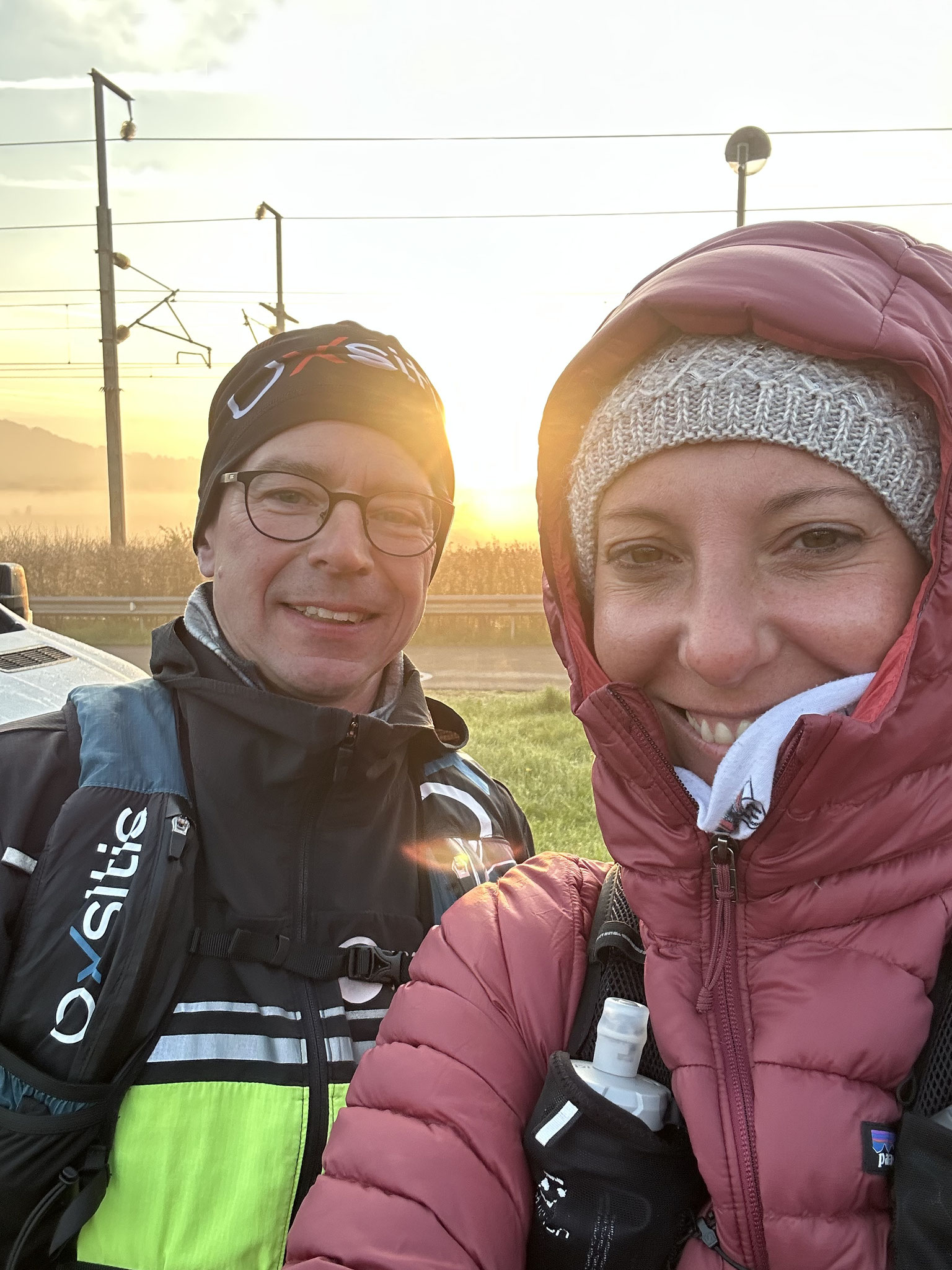
When we started again at 07:00 after our nap, the sun was just coming up and the sunrise was fantastic. Usually, a new day gives me new strength. This time, I was still very tired and it took me a while to get going again. The tiredness was even worse. I had been on my feet for 23 hours and was running for 12 with only an hour and 20 minutes' sleep.
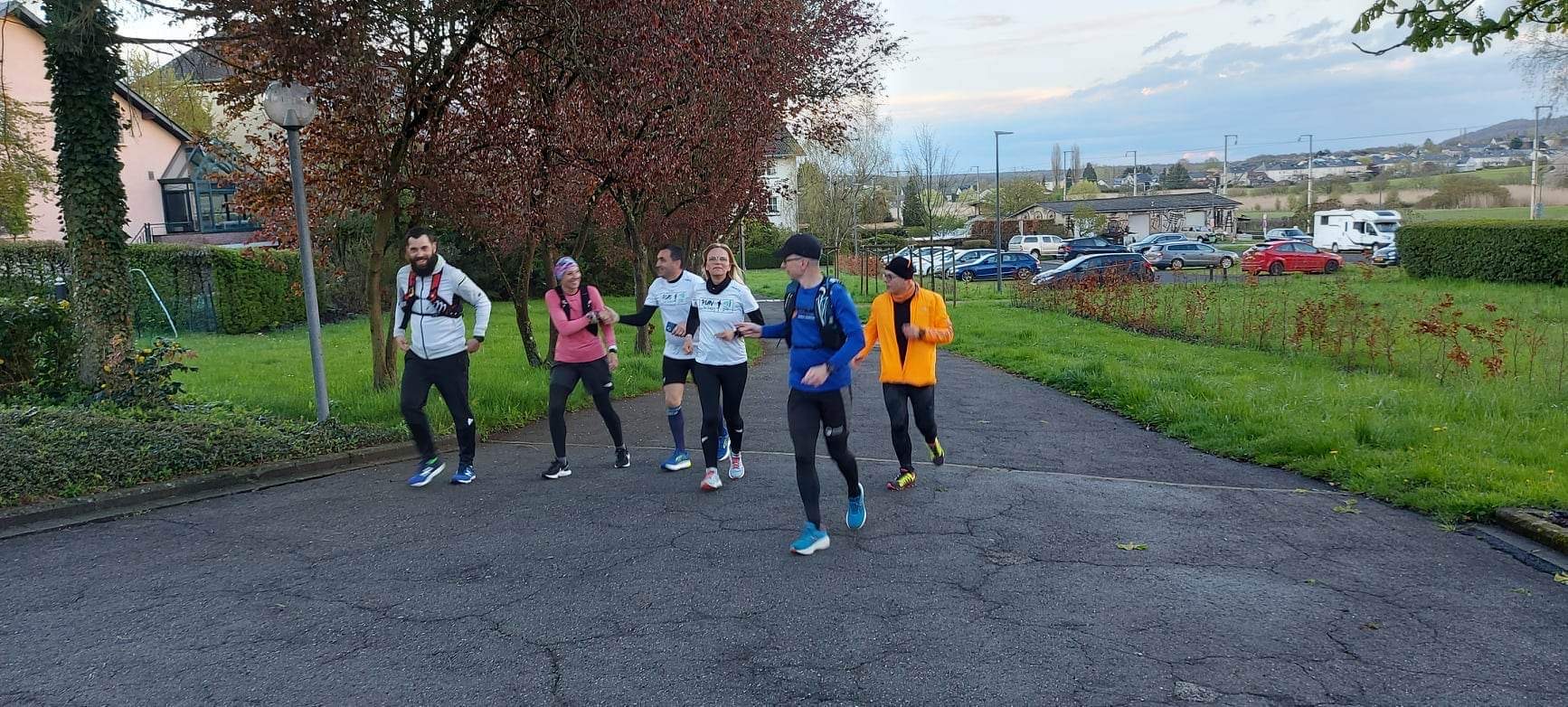
As soon as we started running, other runners joined us, some for just a few laps and others for the whole way. This added variety and was a great motivator. The danger, though, was getting into a different rhythm and running 'too fast' for the remaining hours. I managed to find the right balance between 'going with the flow' and conserving energy. And of course our lovely companions adapted to our snail's pace.
I began to lost my sense of time. The last time I was consciously aware of it was at 7:00. We took another break to eat something. From then on, it became increasingly difficult for me to run, and I ended up walking more and more. By the time we had covered 120 km, I was exhausted and just wanted to lie down. But only for ten minutes this time! In fact, we only slept for ten minutes, sitting down. Claude seemed to have recovered, but I was really struggling. I just felt endless tiredness and a desire to sleep. I didn't want to move. Two more hours.
How do you motivate yourself to get up and run at a point like that?
I don't know what was going through my mind at that moment or what kept me going. I wrote to a friend to tell her that I was feeling really low, and we chatted for a while. Our conversation distracted me and gave me an incredible amount of strength. Then I became very emotional. All sorts of emotions took turns. I wanted to cry because I was tired, because I was happy that it would soon be over, because I was proud to still be on my feet, because I missed my friends and because I had made almost 130 km. After that, I felt empty, but I just carried on. I felt pleasantly empty and peaceful. The tiredness had also somehow gone. At least, I didn't feel it anymore. The end was near — only an hour to go. My feet were hurting. But that didn't matter now. Then it started to rain heavily again. I pulled my hood over my head at that moment and tried to suppress any anger or frustration. I was freezing, and the rain was stinging my skin all over. But I focused on my movements one last time, ignoring everything around me. Soon it would be over!
24 hours – 130 kilometres. I had a big smile on my face. It was a great feeling! We crossed the finish line with Guy, who was walking during the entire 24 hours and covered 108 kilometres, and Claude's brother, who had run with us for hours. Claude and I were sure of one thing: it was time to stop doing 24-hour races for a while. We'll see who suggests organising another 24-hour race next time!